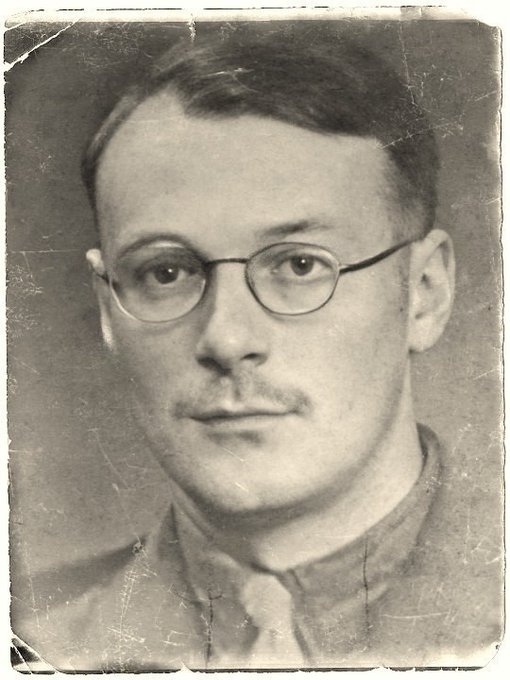
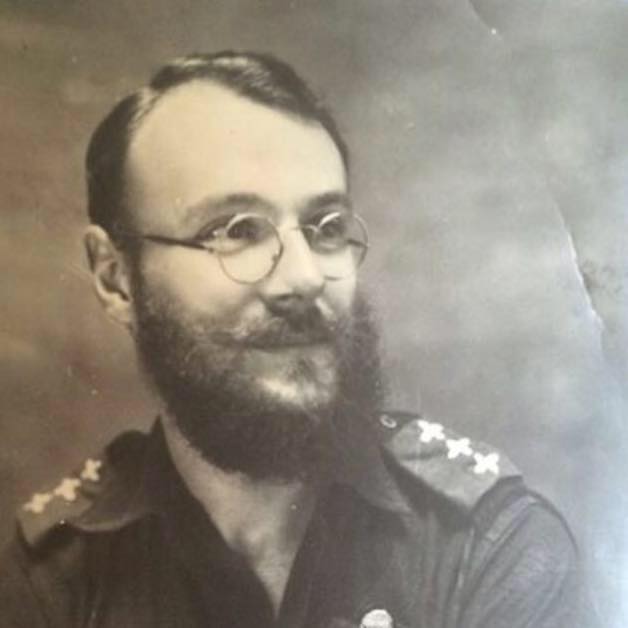
SOE field agent. Paratrooper. Officer with the Karen guerrillas. War crimes judge.
A London solicitor’s clerk who parachuted into Japanese-occupied Burma at the age of twenty-four
and served on the most successful SOE operation of the entire war.
From a scholarship boy in Sussex to a paratrooper behind enemy lines in Burma to a judge sentencing war criminals in Singapore — traced through his declassified SOE personnel file.
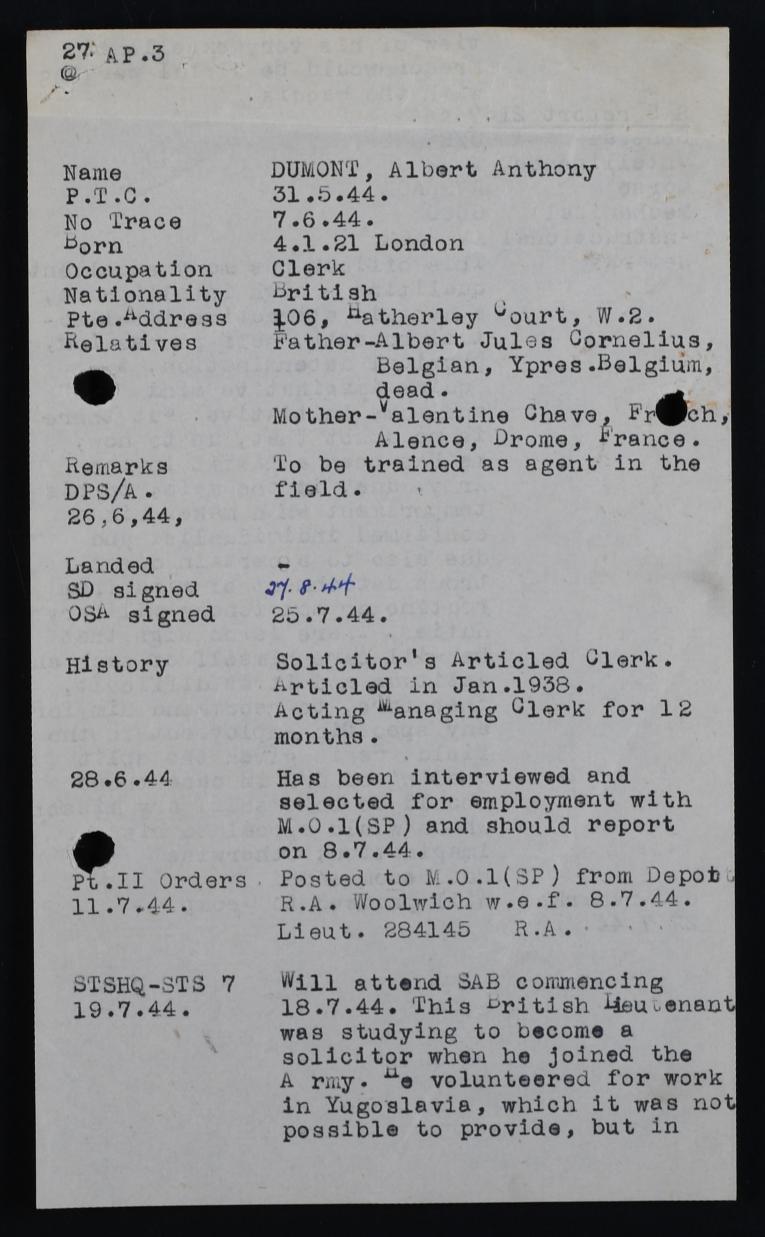
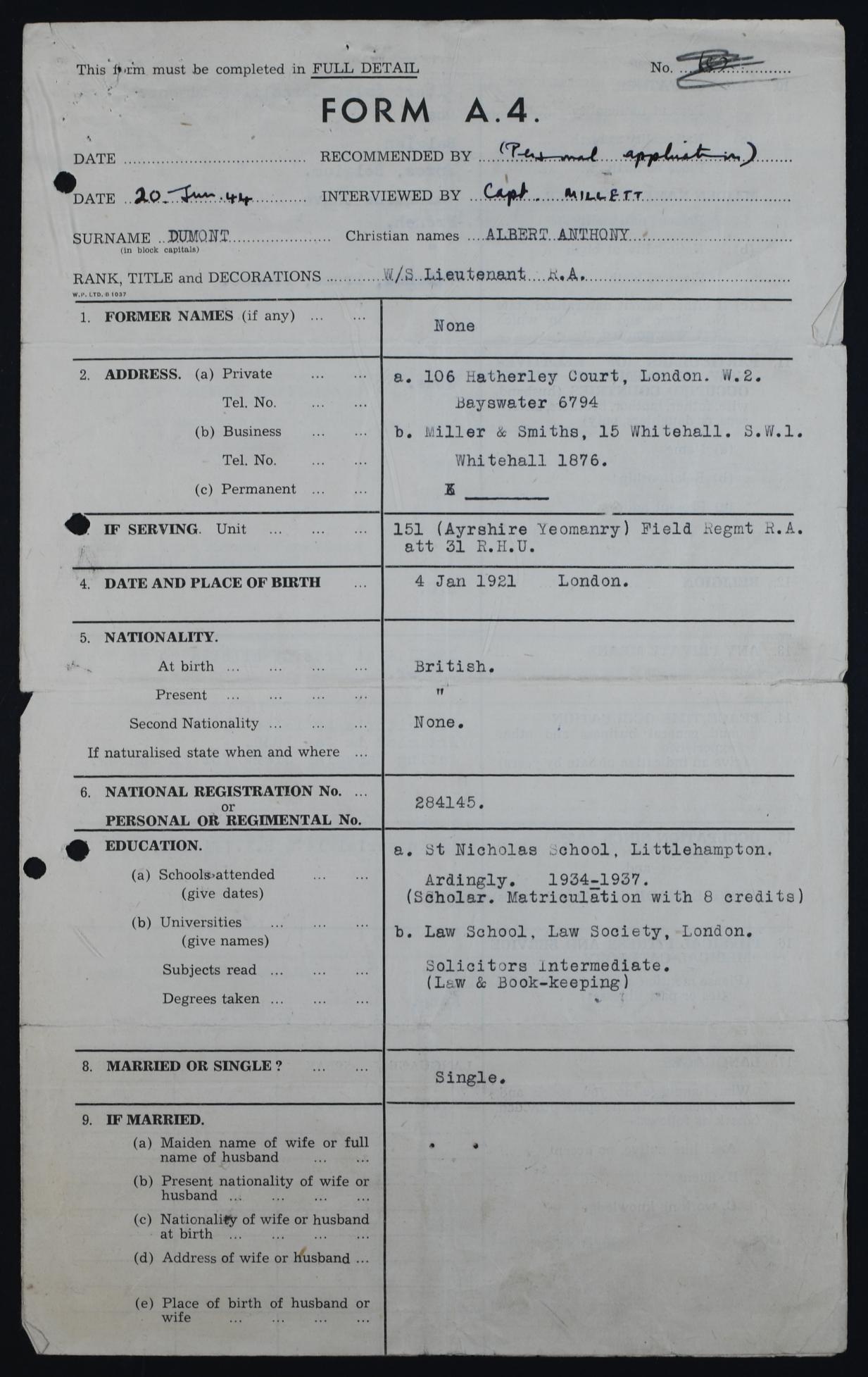
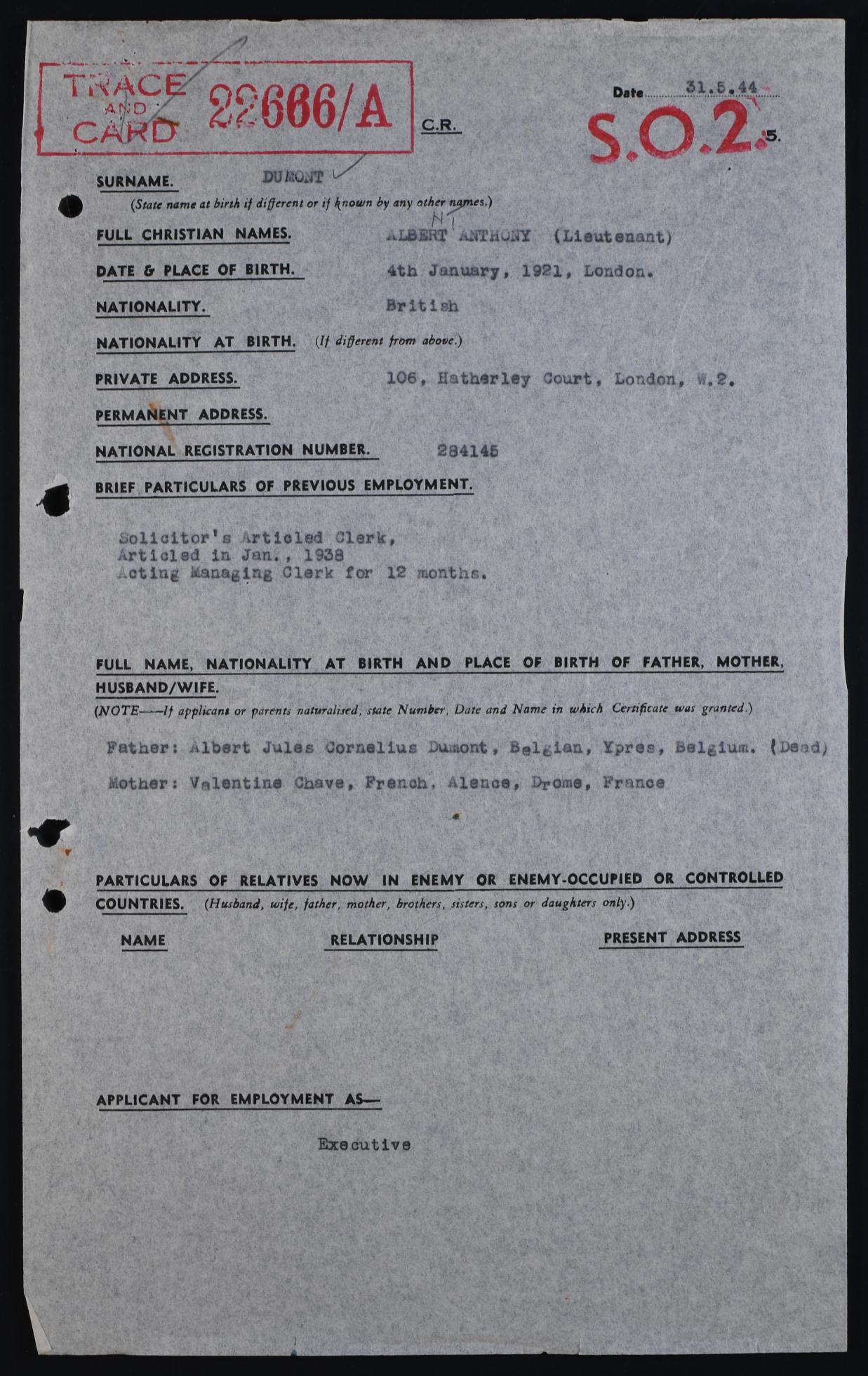
Albert Anthony Dumont born to Albert Jules Cornelius Dumont (Belgian, from Ypres) and Valentine Chave (French, from Valence, Drôme). The family lives at 106 Batherley Court, London W.2.
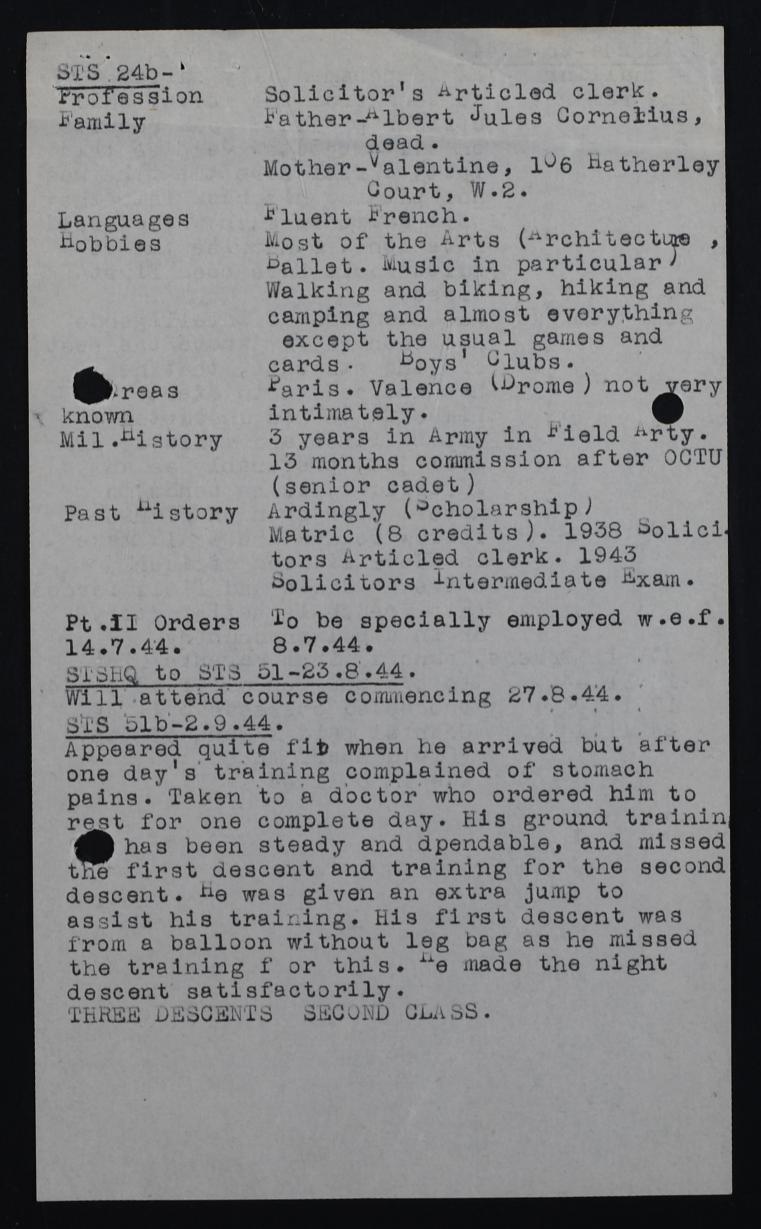
PersonalWins a scholarship. Matriculates with six credits. Develops a love of architecture, ballet, music, hiking and camping.
PersonalBegins legal training at the Law School, Law Society, London. Passes Solicitors Intermediate Exam. Rises to Acting Managing Clerk within 12 months.
PersonalServes 3 years with the 131st (Ayrshire Yeomanry) Field Regiment, R.A., based at HQ R.A. Dover. Commissioned as Lieutenant after OCTU as senior cadet. Service No. 284145.
MilitarySOE opens file 22666/A on Albert Anthony Dumont. Designated S.O.2. Applies personally for employment as “Executive” — a field agent.
SOEInterviewed and selected for employment with M.O.1(SP). Volunteers for Yugoslavia, but his fluent French redirects him toward F Section — occupied France.
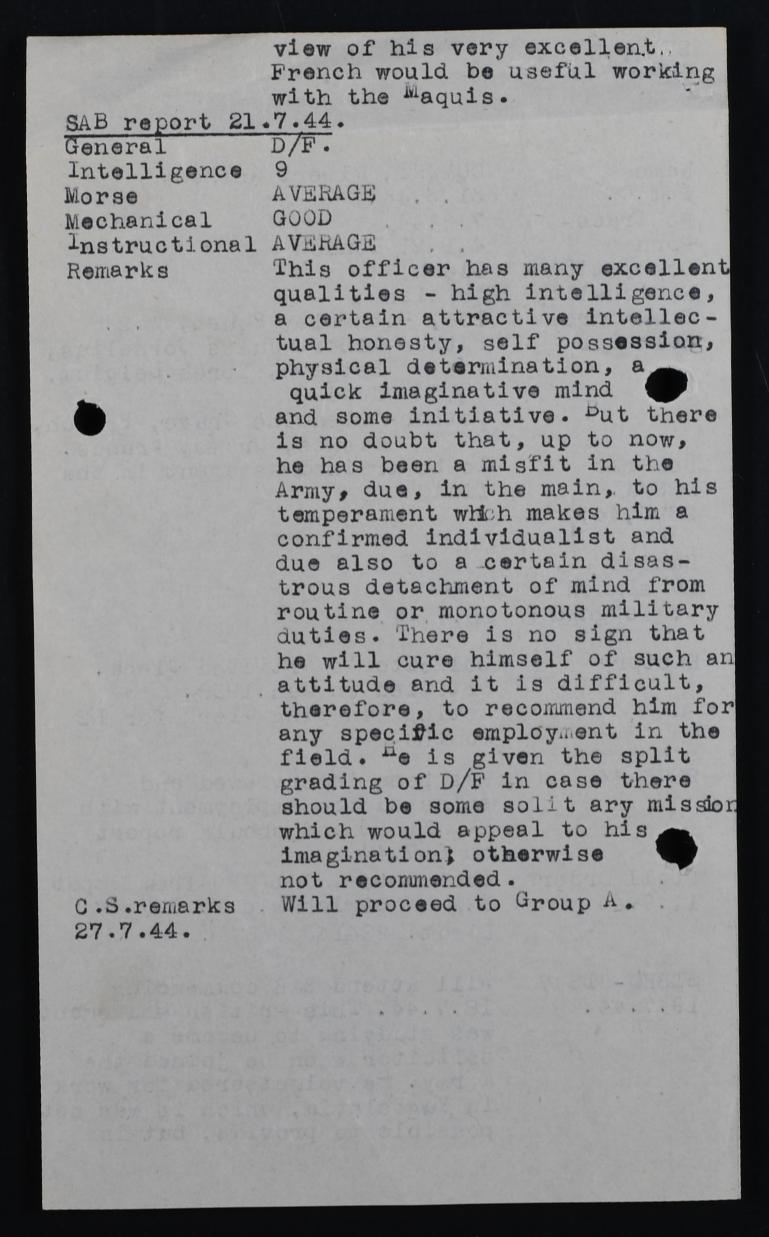
SOEIntelligence score: 9 (highest). Described as having “high intelligence, attractive intellectual honesty, self possession, quick imaginative mind.” Judged a “confirmed individualist” — perfect for solitary missions.
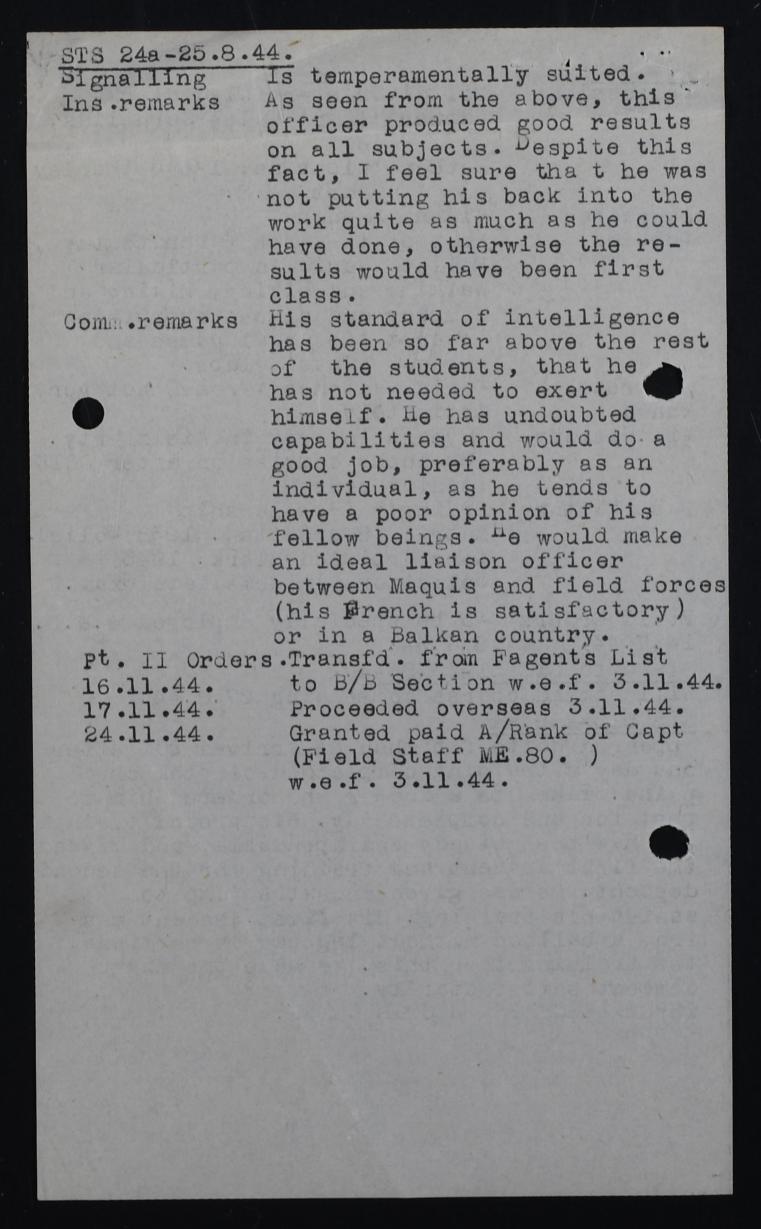
SOE TrainingTradecraft, codes, cover stories, resistance to interrogation. Instructors note: “His standard of intelligence has been so far above the rest of the students, that he has not needed to exert himself.”
SOE TrainingThree descents, Second Class. First jump from a balloon without leg bag. Stomach pains force one day’s rest; given an extra jump. Completes night descent satisfactorily.
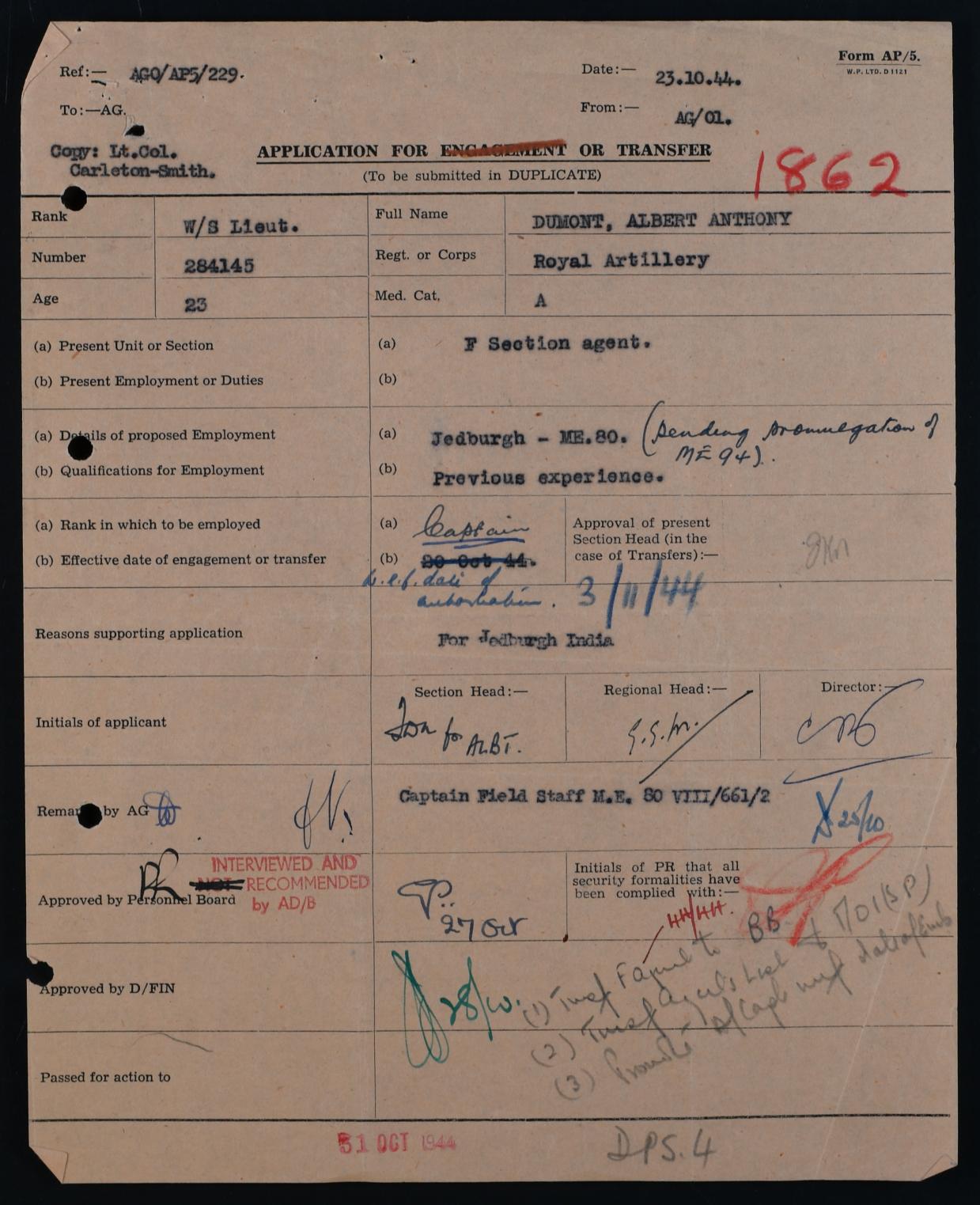
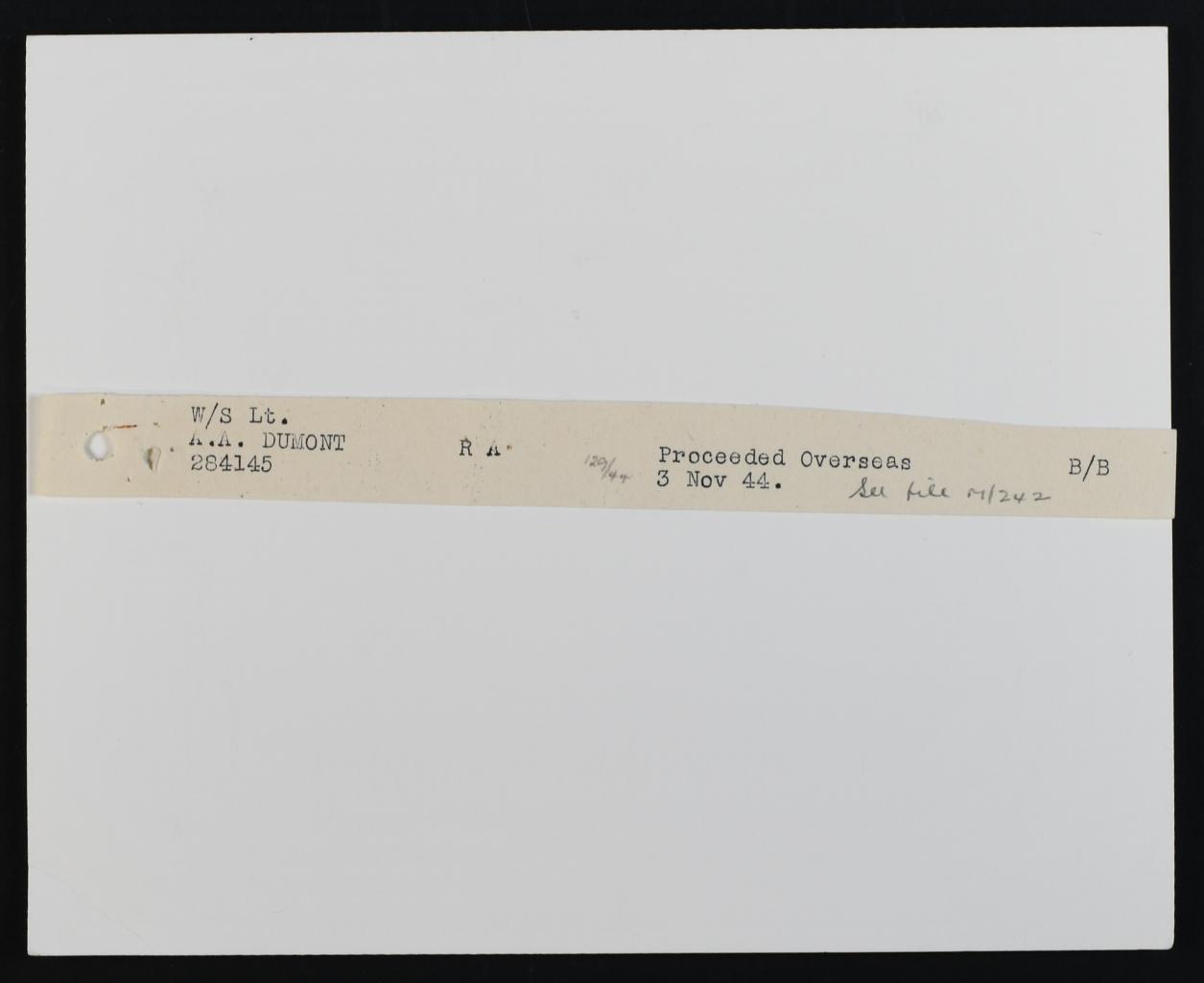
SOE TrainingD-Day has passed; F Section no longer needs agents in France. Dumont is transferred from the F agents list to B/B (Burma/Far East) Section. Proceeds overseas. Promoted to Acting Captain.
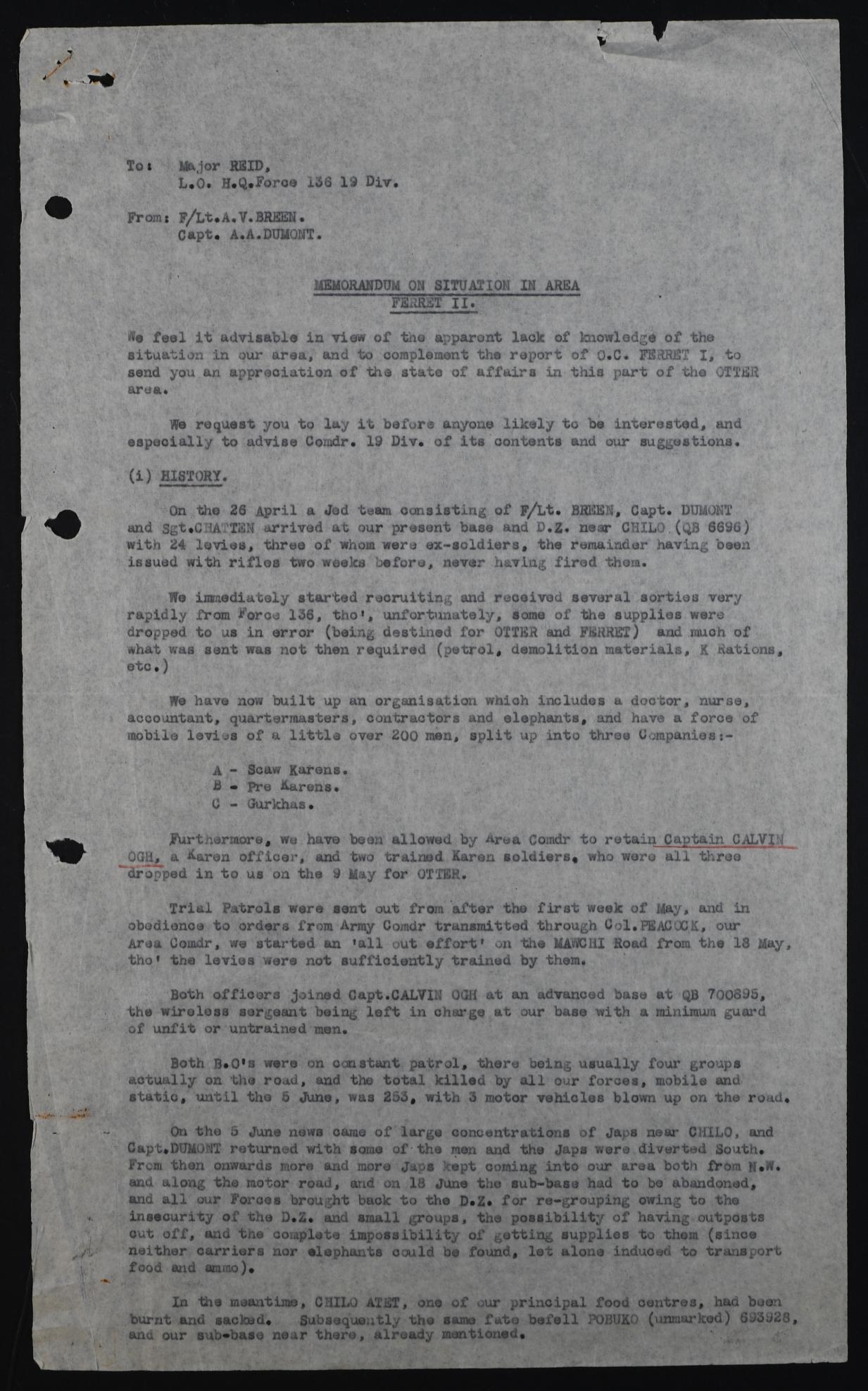
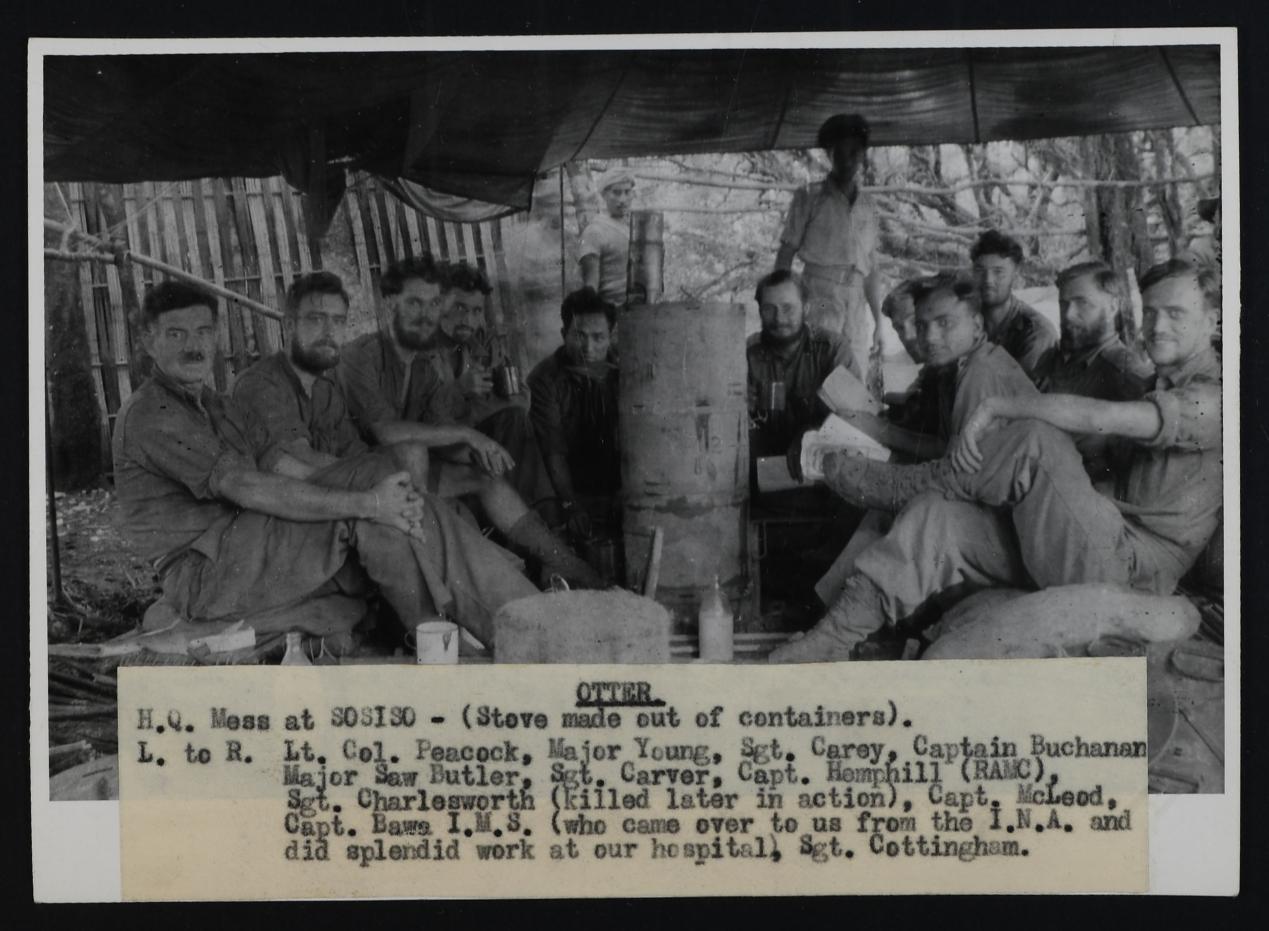
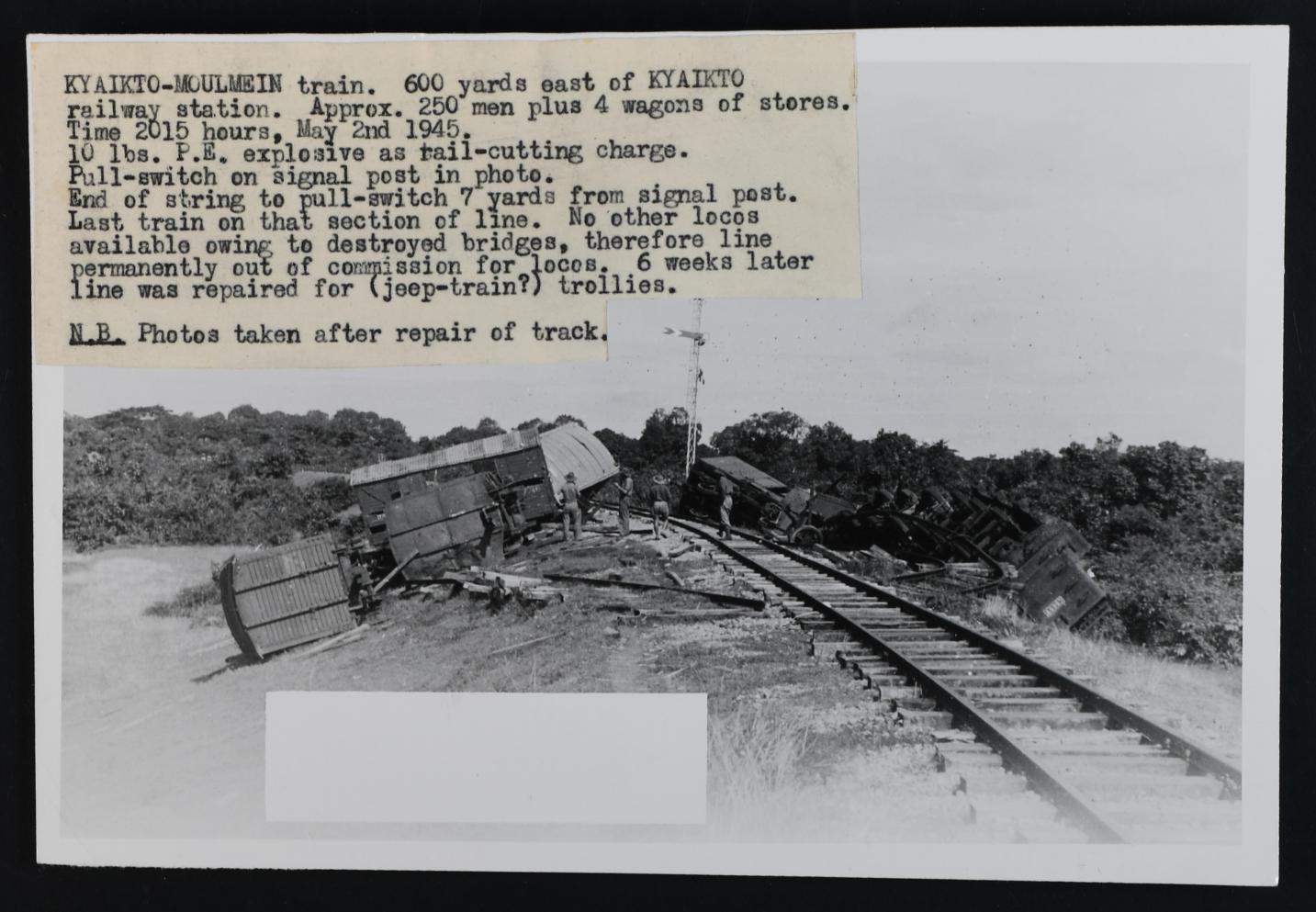
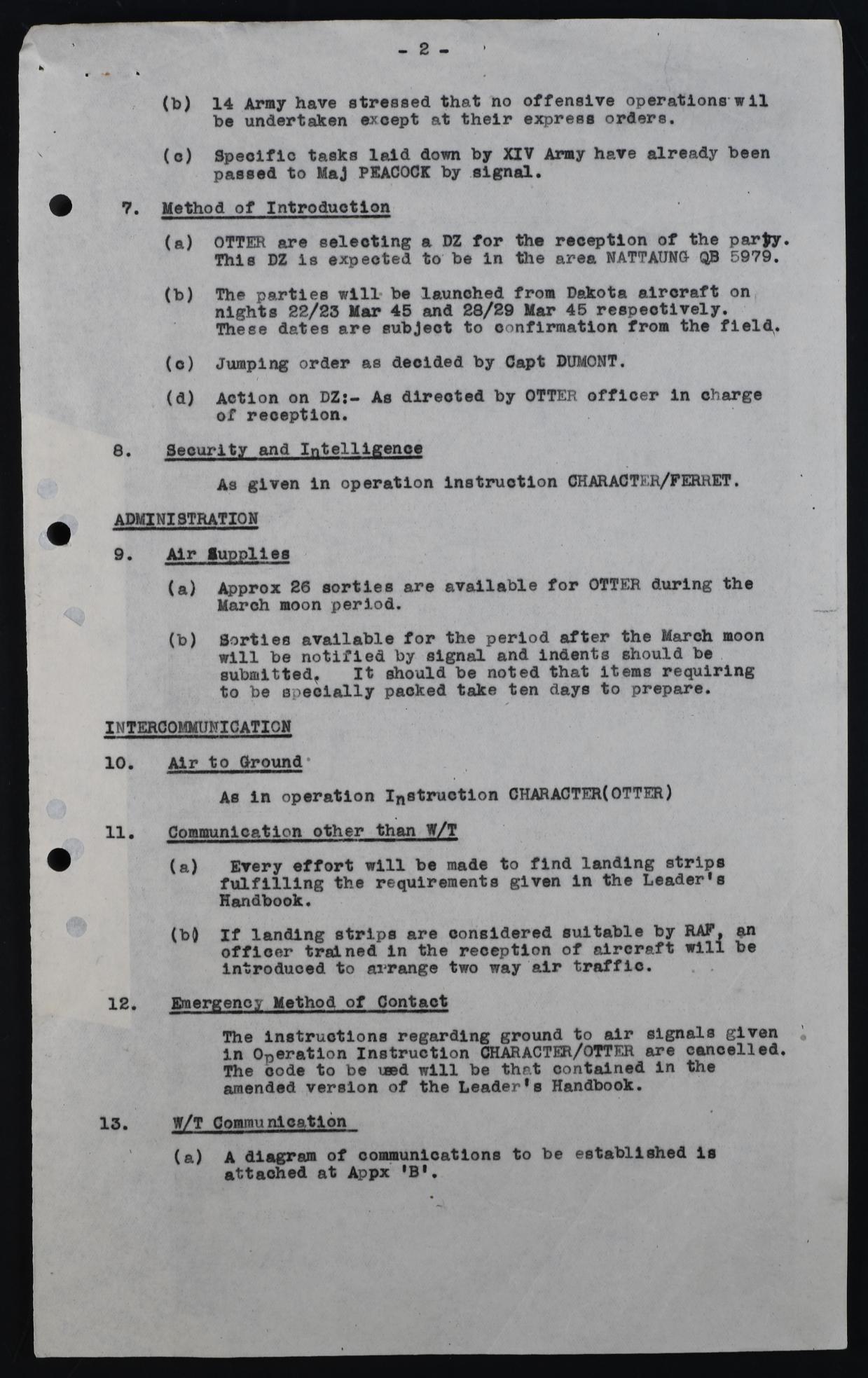
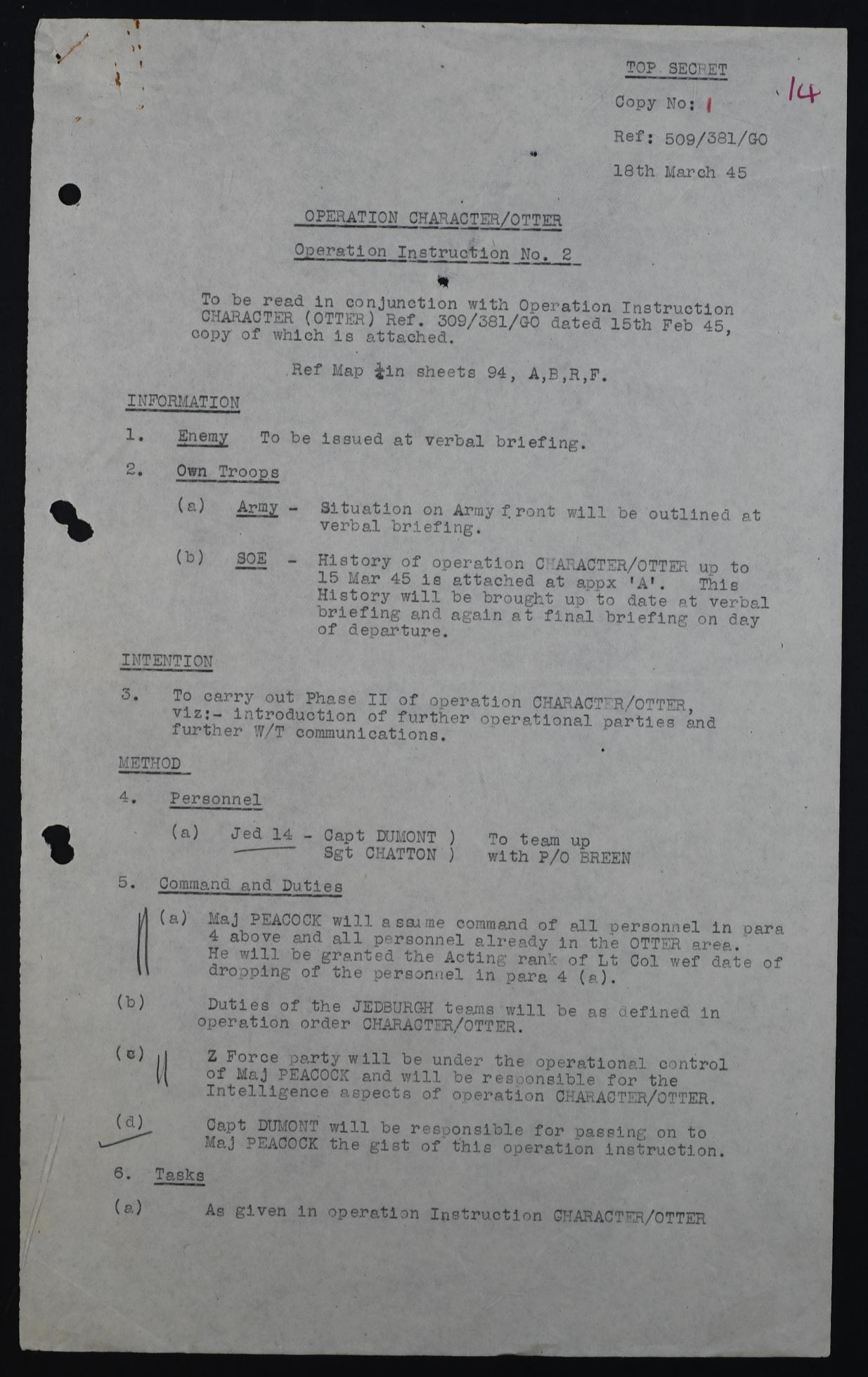
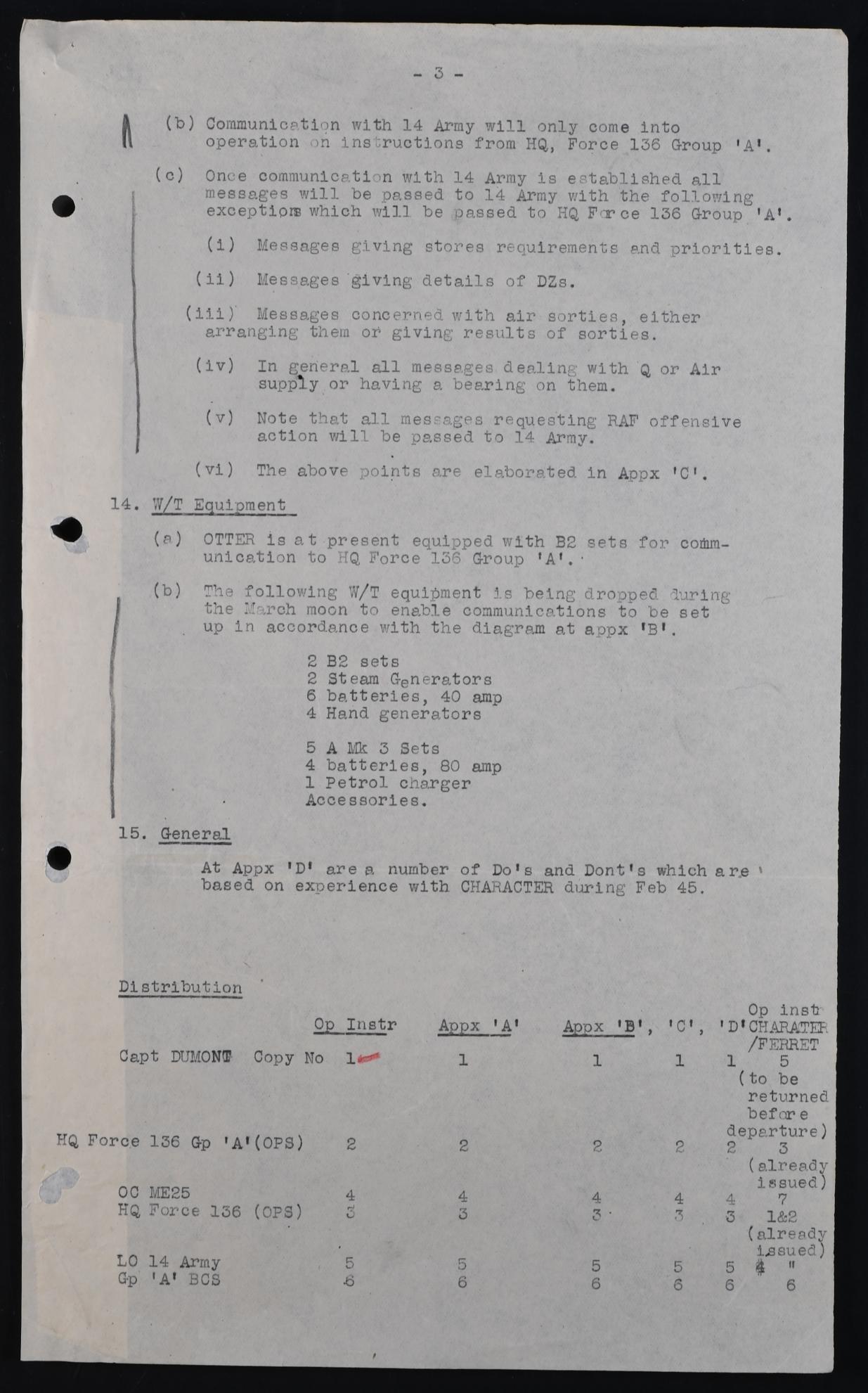
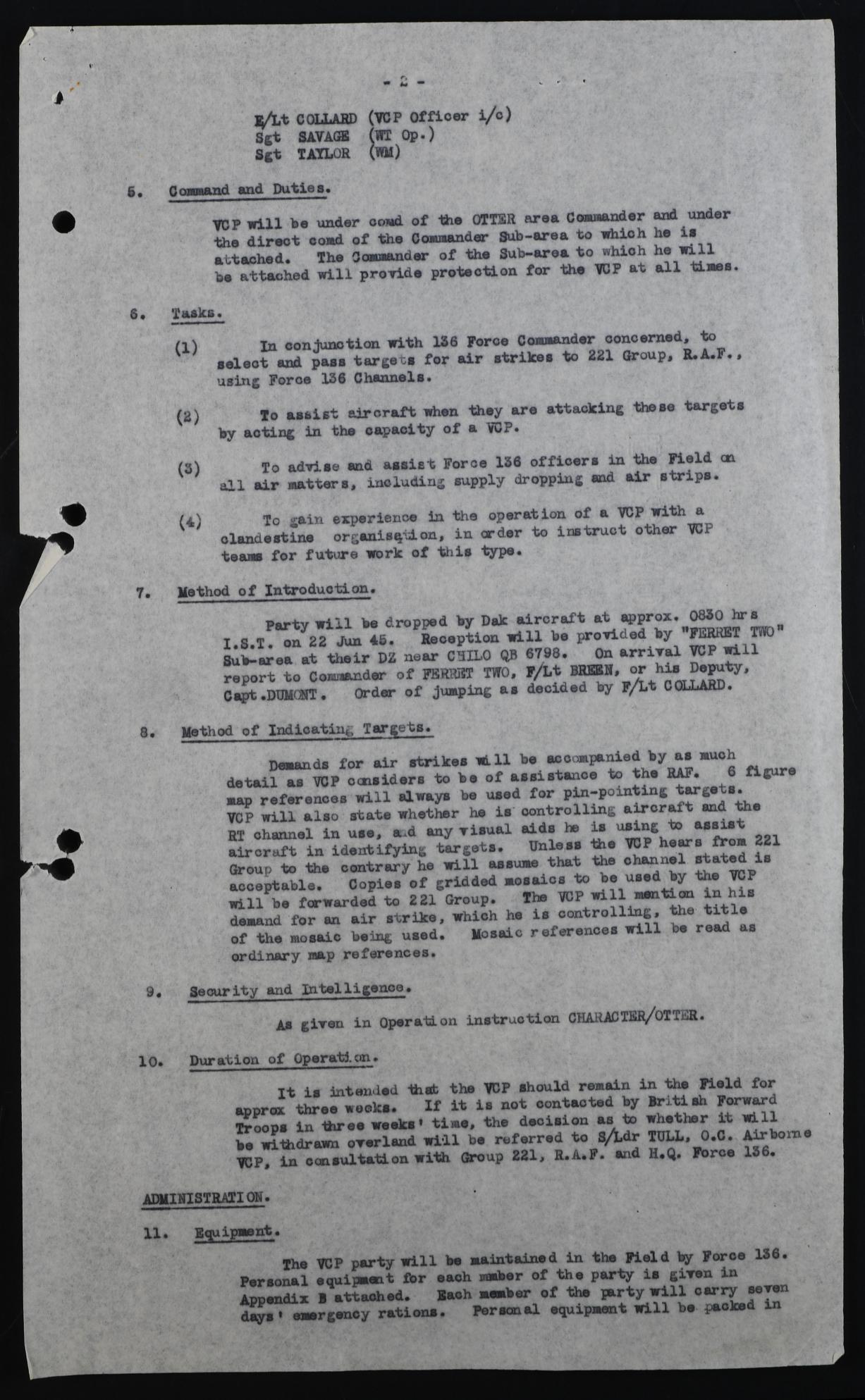
DeploymentCaptain Dumont drops into Japanese-occupied Burma to join Operation Character, the largest and most successful SOE operation of the war. Assigned to teams Ferret and Otter, under Lt.Col. Edgar Peacock.
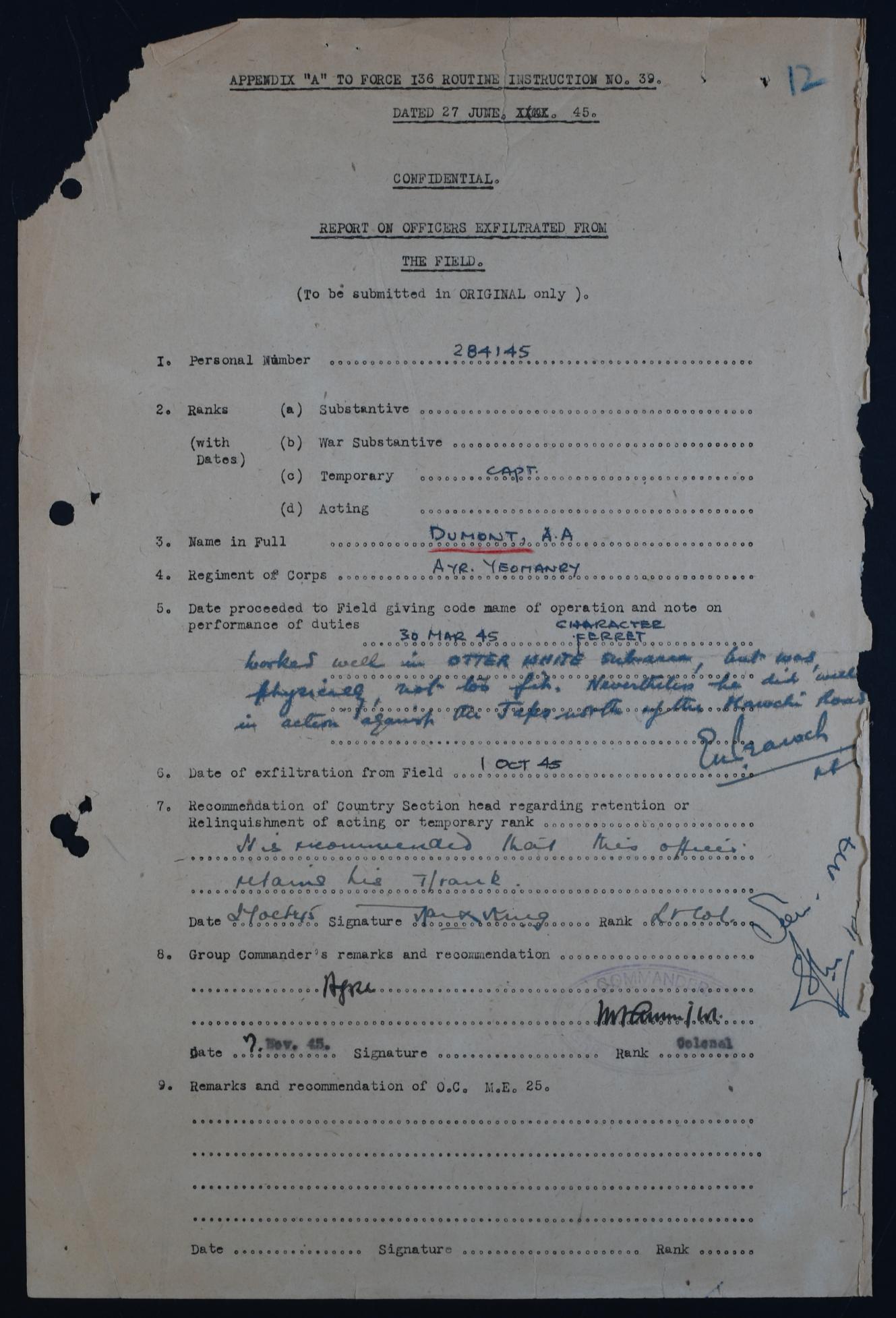
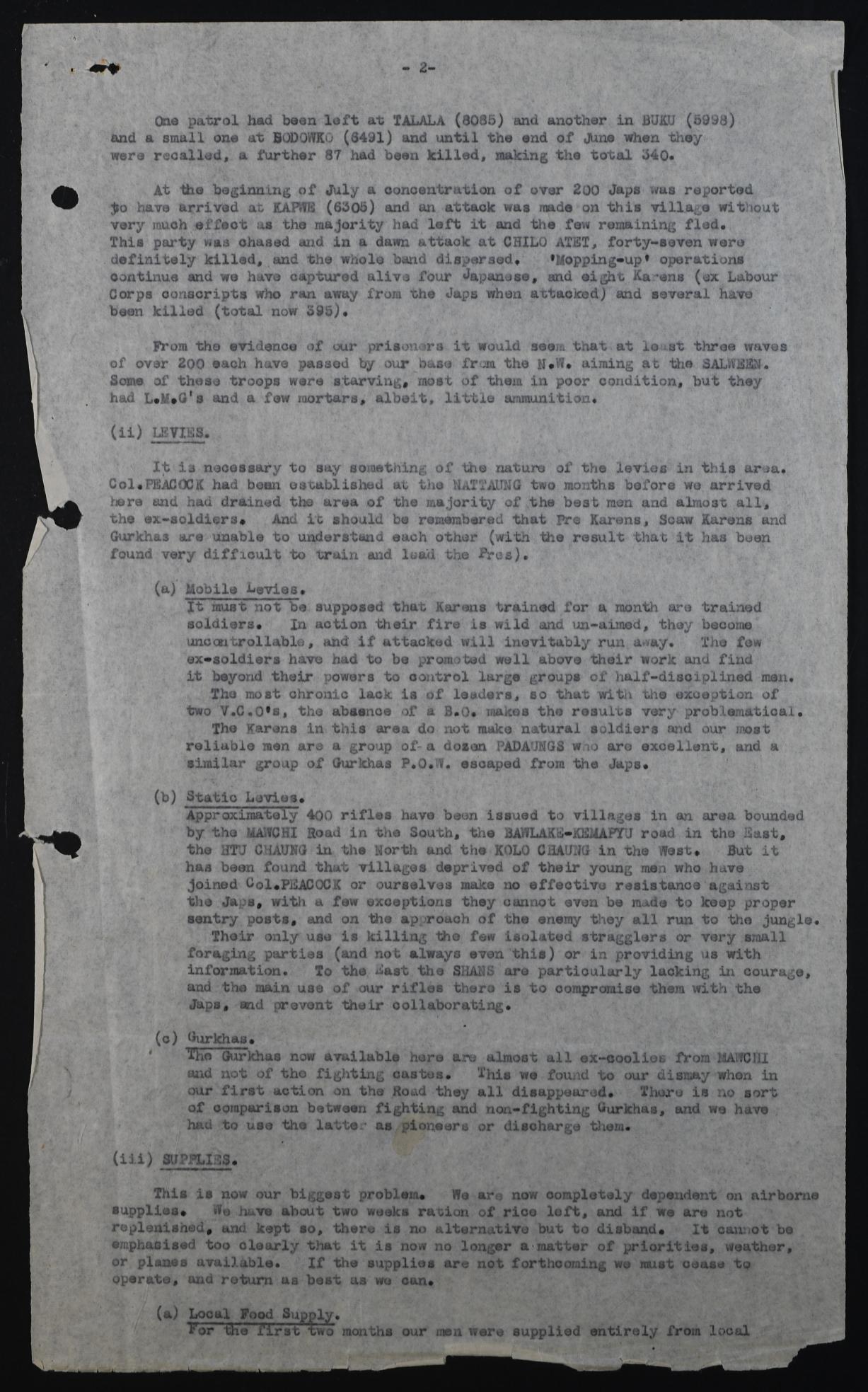
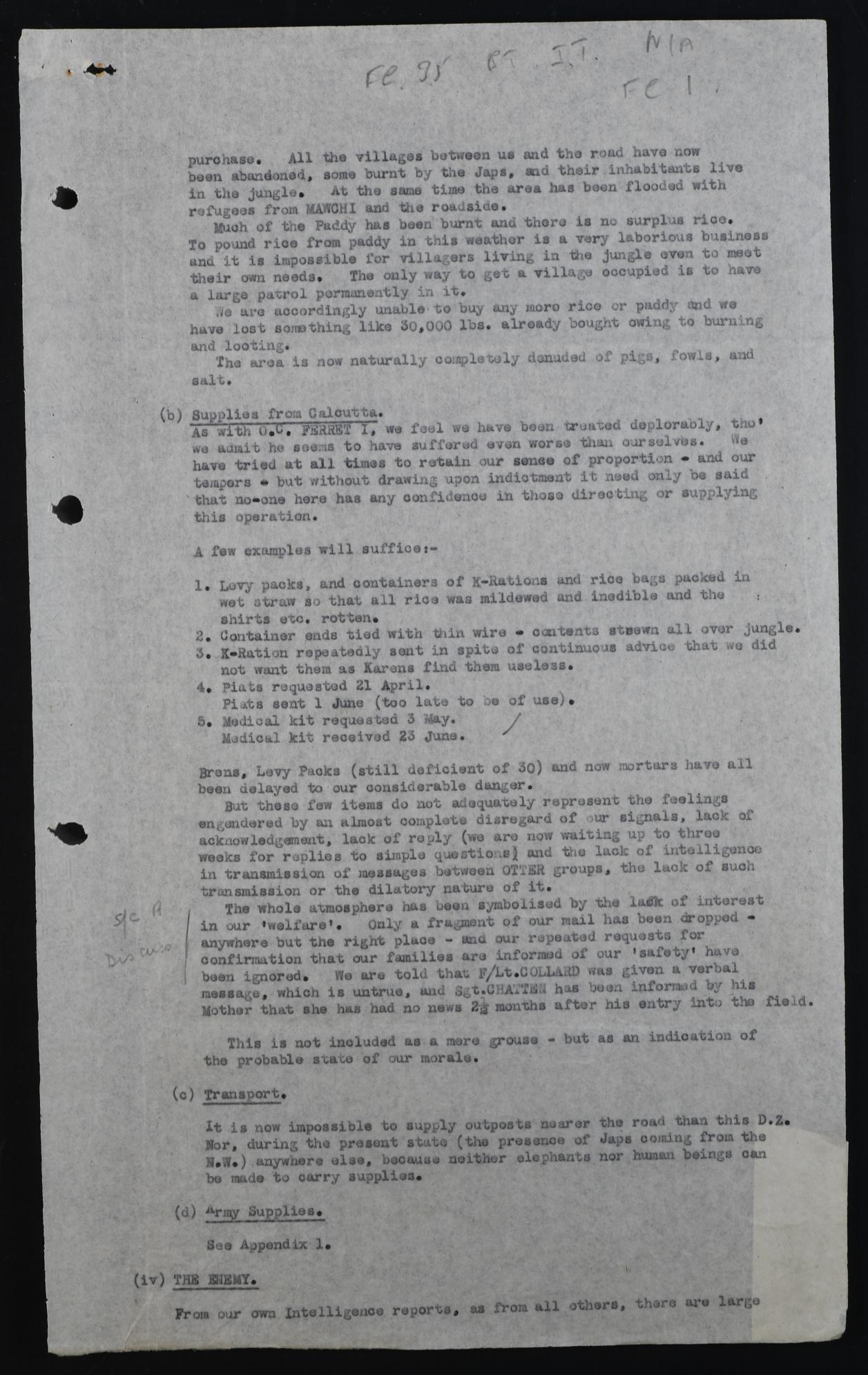
OperationsServes in the Karen Hills between the Sittang and Salween rivers, working alongside 12,000 Karen guerrillas to harry the retreating Japanese forces. Writes assessments of fellow officers from a position of command.
OperationsExfiltrated after 6 months in the field. Operation Character has accounted for 11,000–12,000 Japanese killed and wounded — the most successful SOE operation of the entire war.
OperationsDrawing on his legal training, Captain Dumont serves as judge and solicitor on war crimes trials at Singapore. First cases: Sase Yoriyuki (Case 066) and Hachisuka Kunifusa (Case 069).
LegalNow promoted to Major, Dumont sits as one of five judges on the trial of Lt.Gen. Ishida and four senior Japanese officers responsible for POW deaths on the Burma-Siam Railway. Three defendants sentenced to death by hanging.
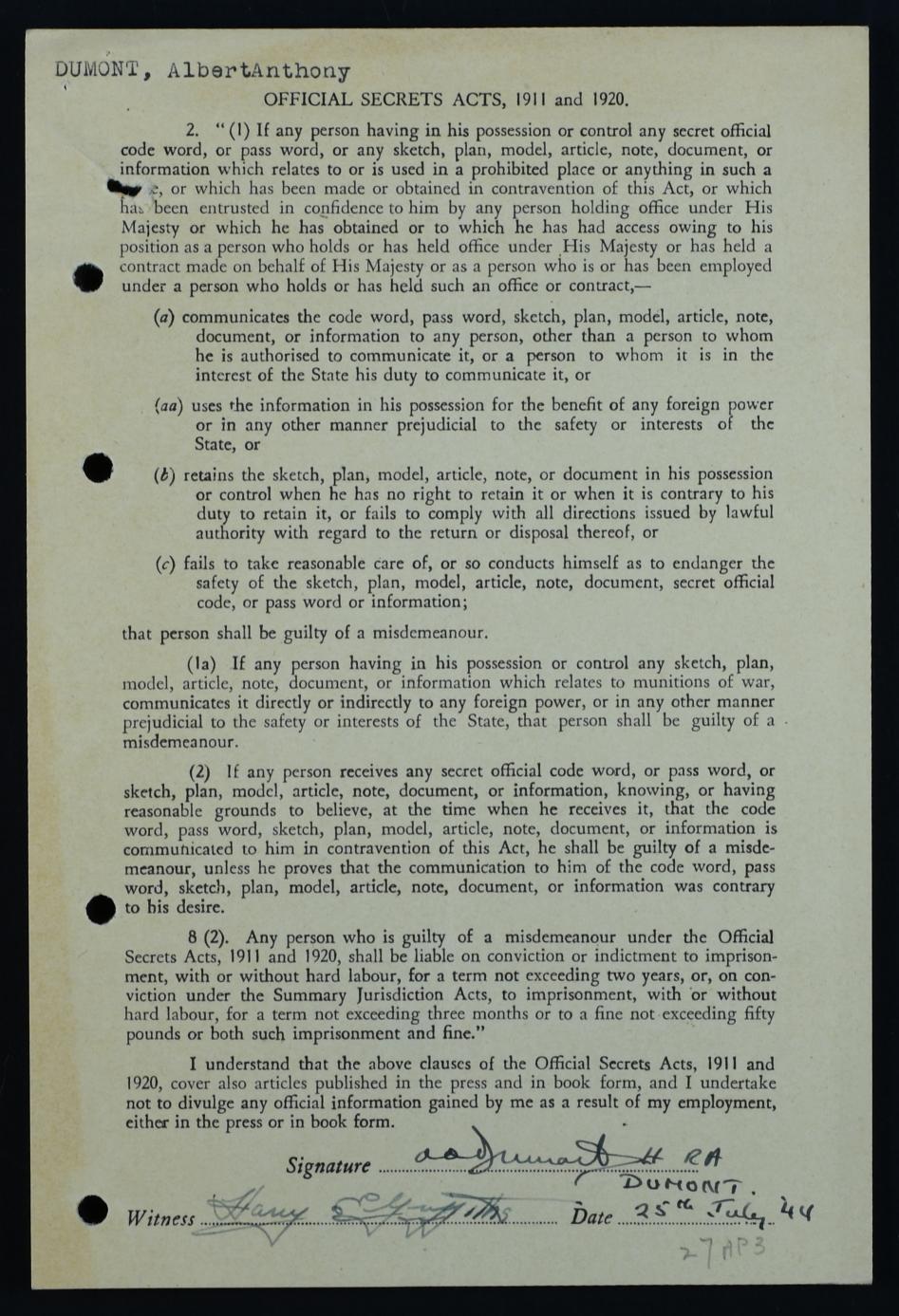
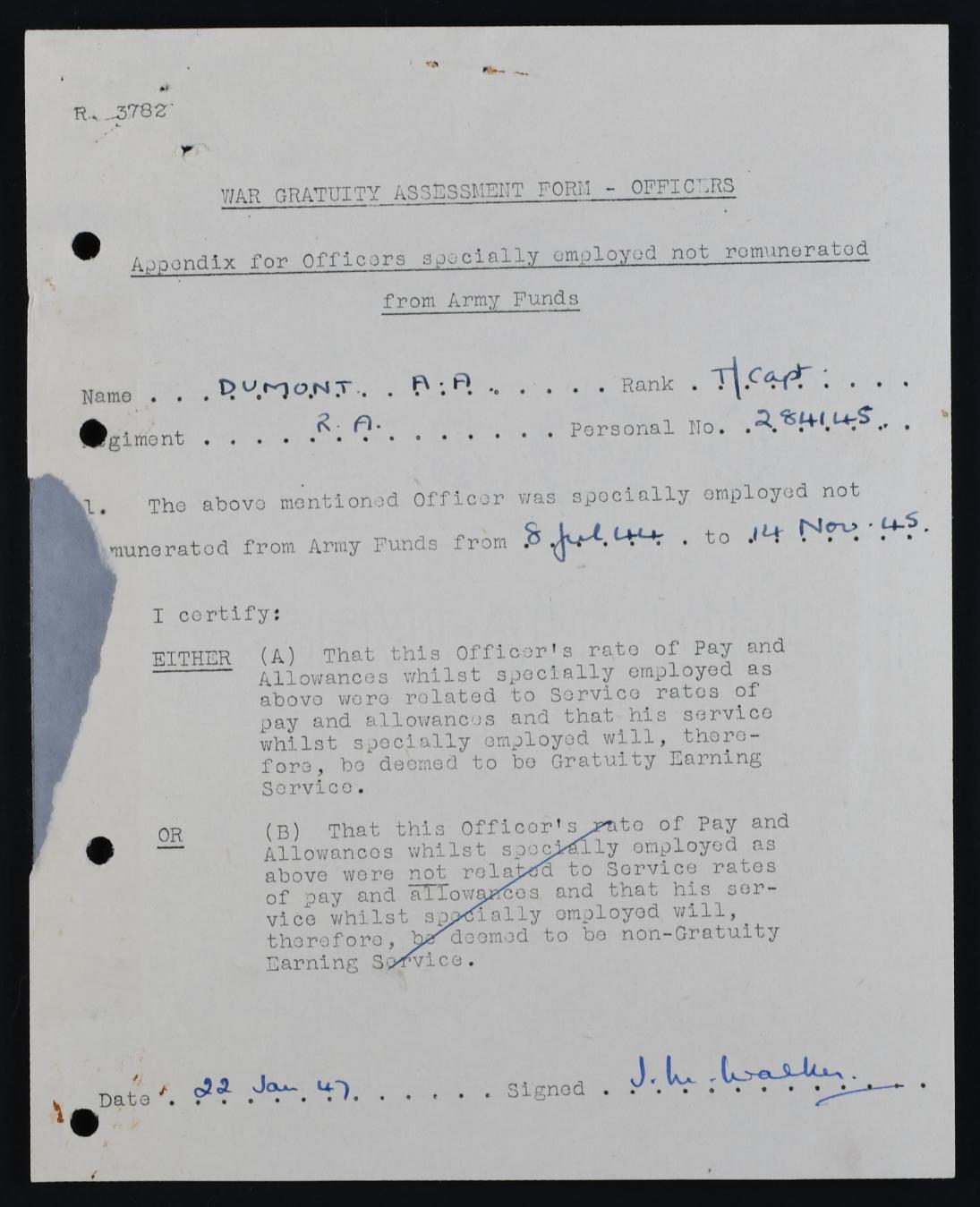
LegalWar Gratuity Assessment Form signed, marking the administrative end of special service. Returns to civilian life.
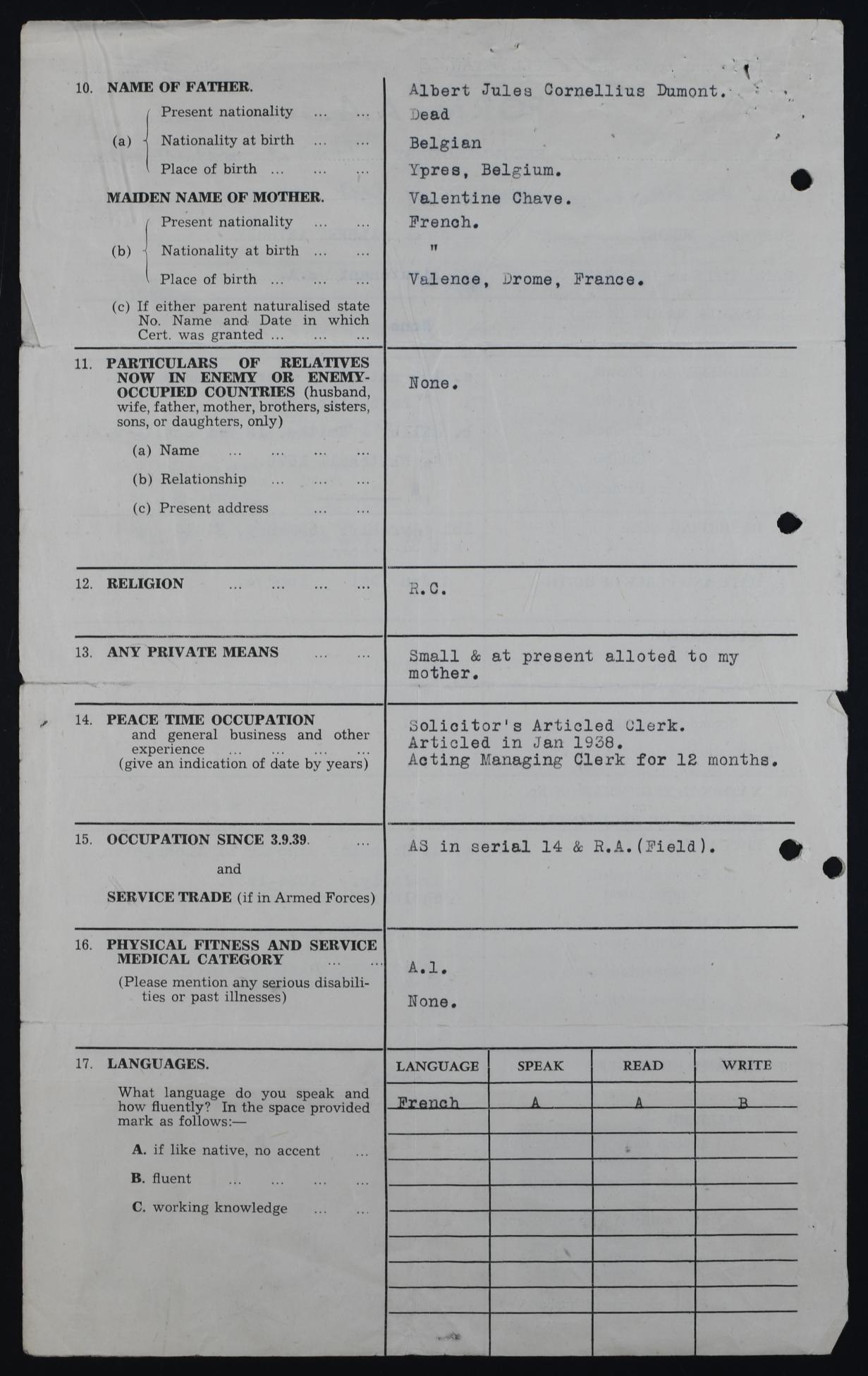
PersonalAlbert Anthony Dumont was born on 4 January 1921 in London, the son of a Belgian father and a French mother. His father, Albert Jules Cornelius Dumont, was a textile dealer from Ypres, Belgium — a city that had been virtually obliterated during the First World War. His mother, Valentine Chave, was from Valence in the Drôme department of southeastern France.
The family lived at 106 Batherley Court, London W.2, in the Bayswater area. Anthony’s father died before his son joined SOE — the personnel file records him simply as “dead.” His mother remained at the Batherley Court address, and Anthony allotted what small private means he had to her support.
He was educated first at St Nicholas School, Littlehampton, then won a scholarship to Ardingly College in Sussex (1934–37), where he matriculated with six credits. He went on to the Law School of the Law Society, London, passing the Solicitors Intermediate Examination in law and bookkeeping.
In January 1938, at just seventeen, he was articled as a solicitor’s clerk and within twelve months had risen to Acting Managing Clerk — remarkable responsibility for someone barely out of school. His SOE file records his hobbies as “Most of the Arts (Architecture, Ballet, Music in particular). Walking and biking, hiking and camping and almost everything except the usual games and cards.”
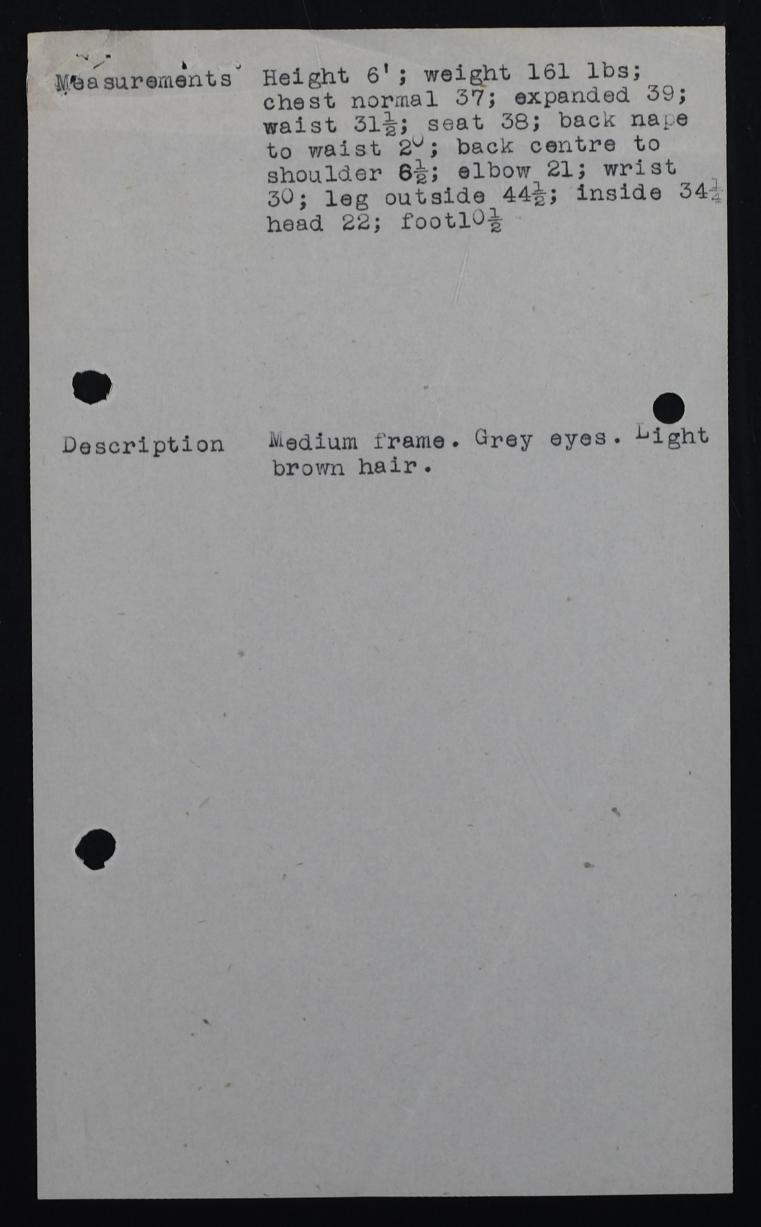
He was Roman Catholic, stood six feet tall, weighed 161 pounds, and had grey eyes and light brown hair. He spoke fluent French from childhood. He knew Paris and Valence “intimately.”
Born: 4 January 1921, London
Height: 6 feet
Weight: 161 lbs
Eyes: Grey
Hair: Light brown
Religion: Roman Catholic
Father: Albert Jules Cornelius Dumont
Belgian, textile dealer, from Ypres. Deceased.
Mother: Valentine Chave
French, from Valence, Drôme, France
St Nicholas School, Littlehampton
Ardingly College, 1934–37 (Scholar)
Law Society School, London
Solicitors Intermediate Exam passed
Articled Jan 1938; Acting Managing Clerk
131st (Ayrshire Yeomanry) Field Regt, R.A.
3 years service, HQ R.A. Dover
Commissioned after OCTU (Senior Cadet)
Service No: 284145
The Special Operations Executive found Dumont in mid-1944. His Trace Card was opened on 31 May, and he was interviewed and selected on 28 June. He applied personally — a man seeking a more purposeful use of his talents than routine artillery duties could provide.
He volunteered for work in Yugoslavia, which SOE couldn’t provide. But they noticed his fluent French — the legacy of his Belgian-French parents — and redirected him toward F Section, the SOE section running agents into occupied France to work with the Maquis resistance.
His path through the SOE training pipeline was marked by consistently brilliant assessments tempered by frank observations about his temperament.
“This officer has many excellent qualities — high intelligence, a certain attractive intellectual honesty, self possession, physical determination, a quick imaginative mind and some initiative. But there is no doubt that, up to now, he has been a misfit in the Army, due, in the main, to his temperament which makes him a confirmed individualist and due also to a certain disastrous detachment of mind from routine or monotonous military duties. There is no sign that he will cure himself of such an attitude and it is difficult, therefore, to recommend him for any specific employment in the field. He is given the split grading of D/F in case there should be some solitary mission which would appeal to his imagination; otherwise not recommended.” — SAB Assessors, STS 7, 21 July 1944
“His standard of intelligence has been so far above the rest of the students, that he has not needed to exert himself. He has undoubted capabilities and would do a good job, preferably as an individual, as he tends to have a poor opinion of his fellow beings. He would make an ideal liaison officer between Maquis and field forces.” — Commanding Officer, STS 24b, Beaulieu
SOE’s training system was methodical and ruthless. Candidates went through assessment at country houses, paramilitary training in the Scottish Highlands at Arisaig (silent killing, demolitions, small arms), a “finishing school” at Lord Montagu’s Beaulieu estate in Hampshire (tradecraft, codes, cover stories, resistance to interrogation), and parachute training at Ringway near Manchester. About one-third of students were dismissed. Those who made it through were among the most capable and resilient people in the British military.
On 30 March 1945, Captain Dumont parachuted into Japanese-occupied Burma. He was 24 years old. The operation he joined would become the most successful SOE operation of the entire war.
Operation Character was launched in February 1945 to mobilise the Karen people of eastern Burma as a guerrilla force against the retreating Japanese. The Karen Hills, between the Sittang and Salween rivers, were ideal guerrilla country — thick jungle, steep valleys, and a population with deep grievances against the Japanese occupation.
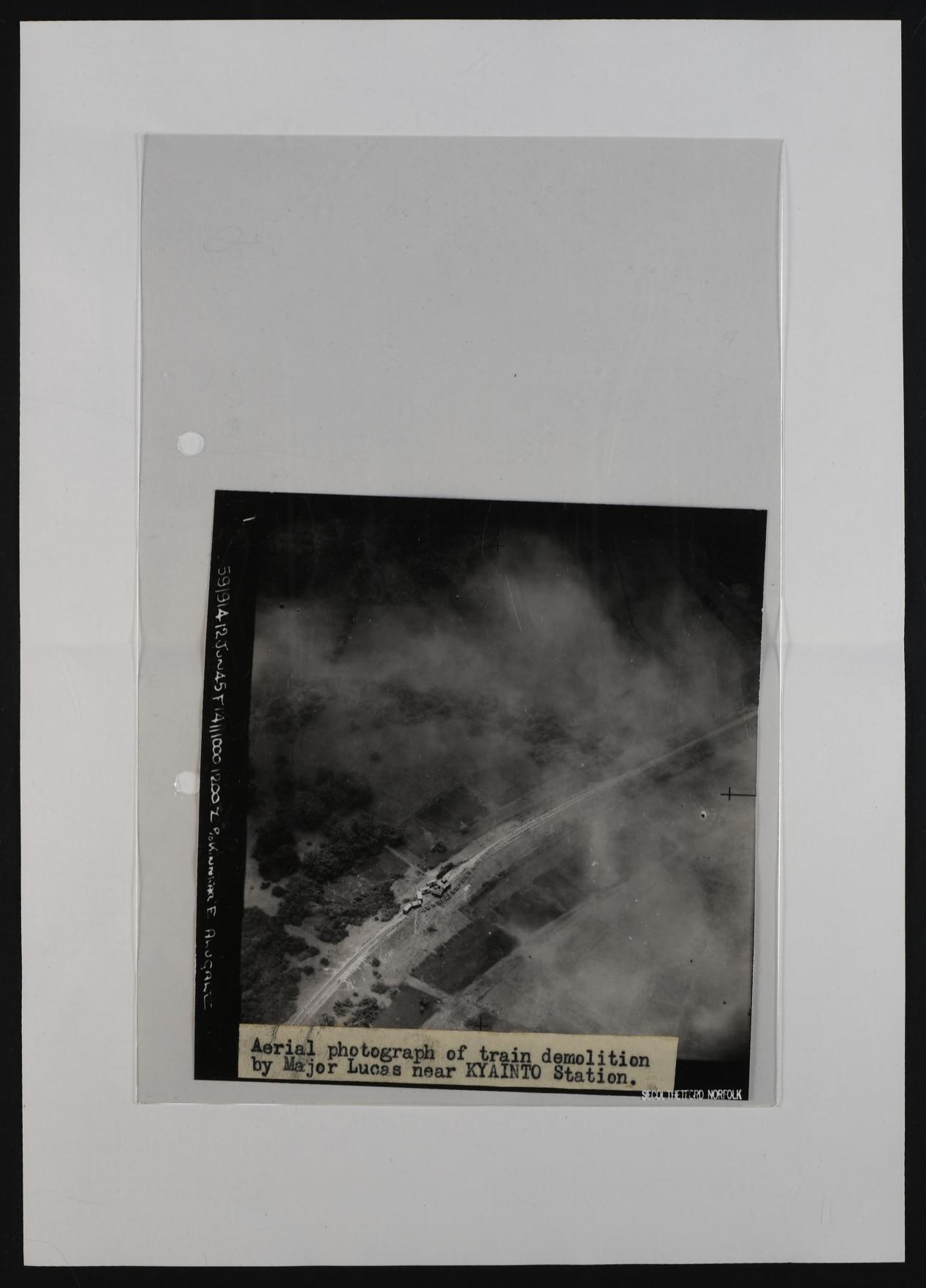
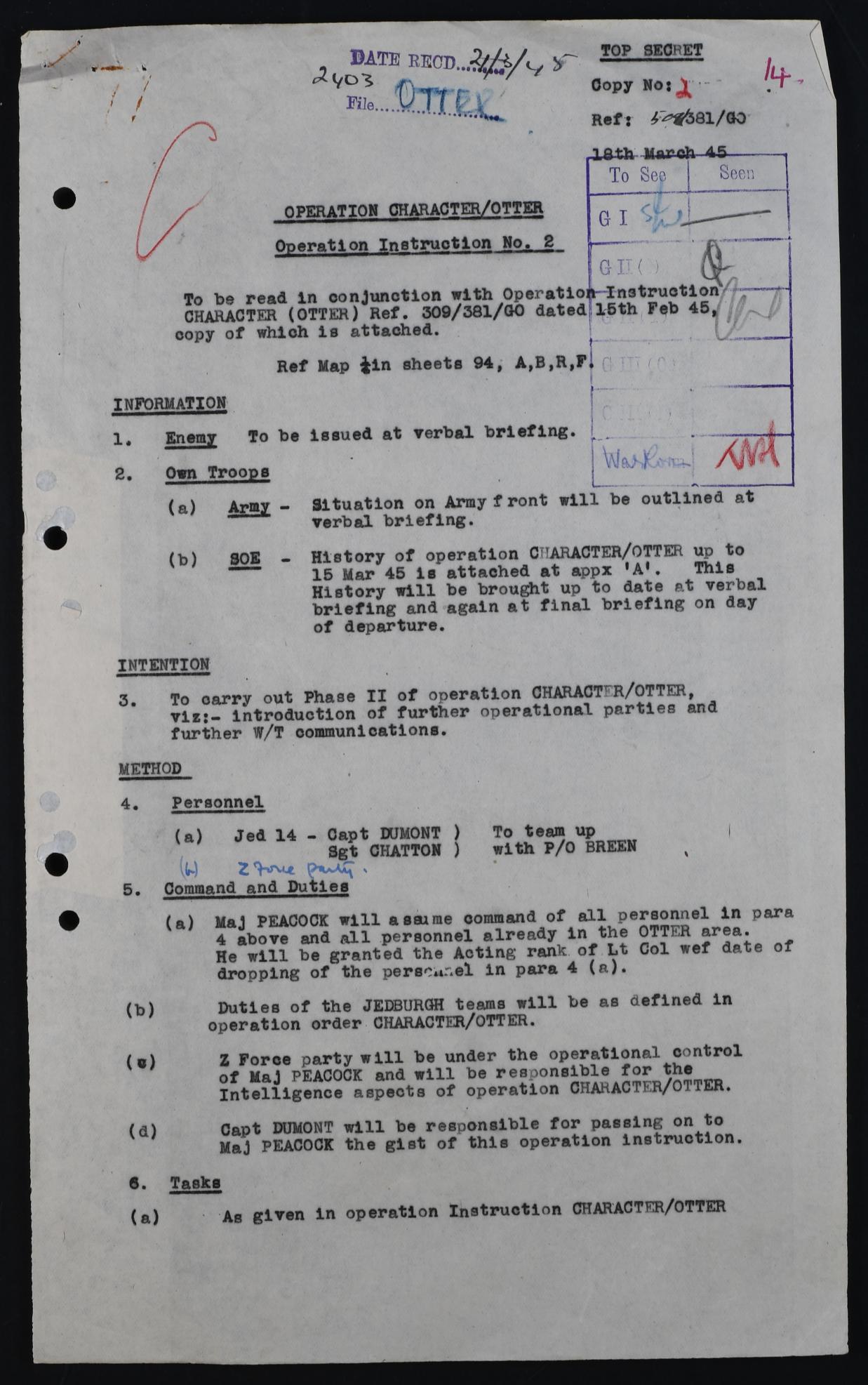
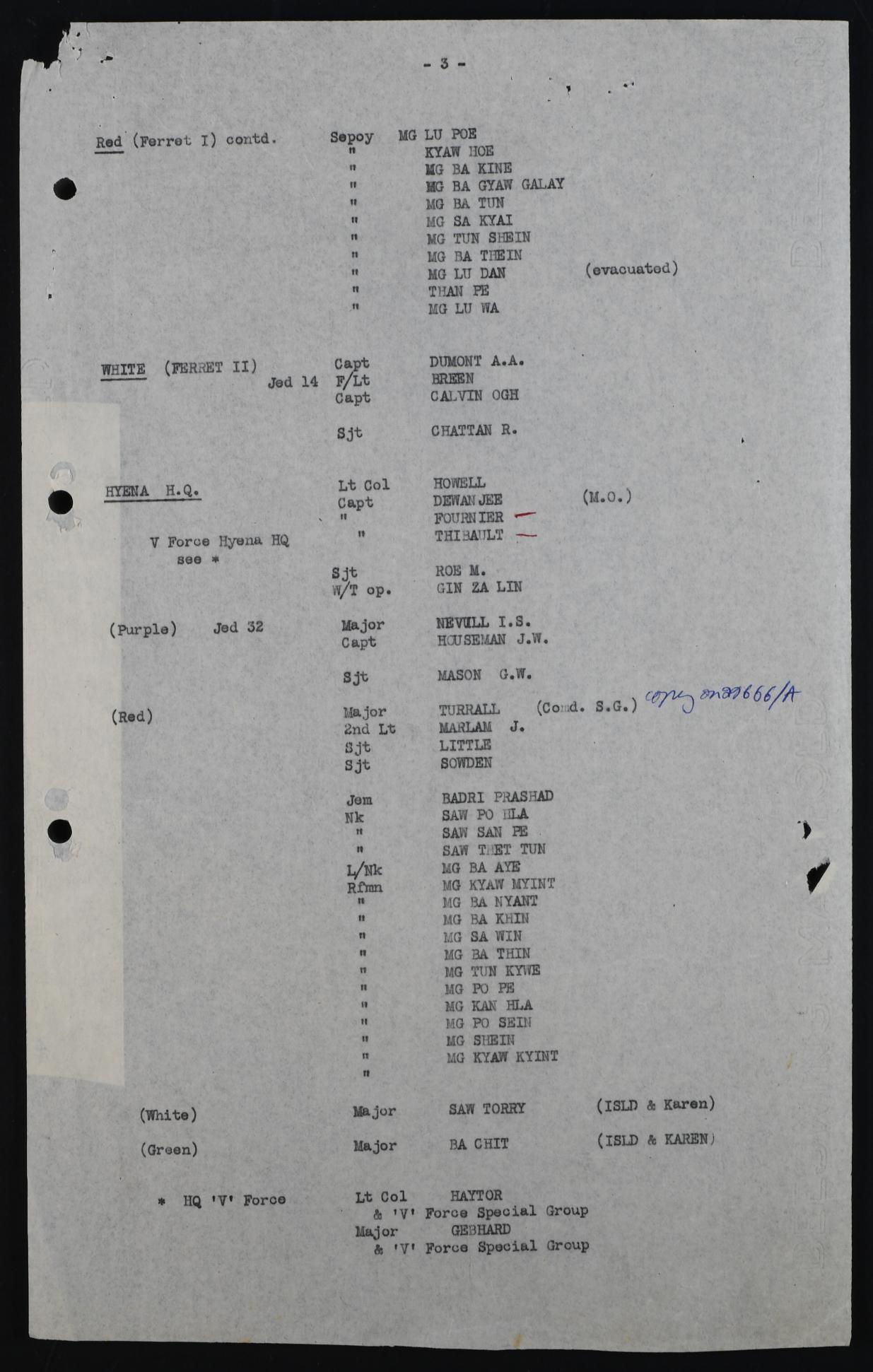
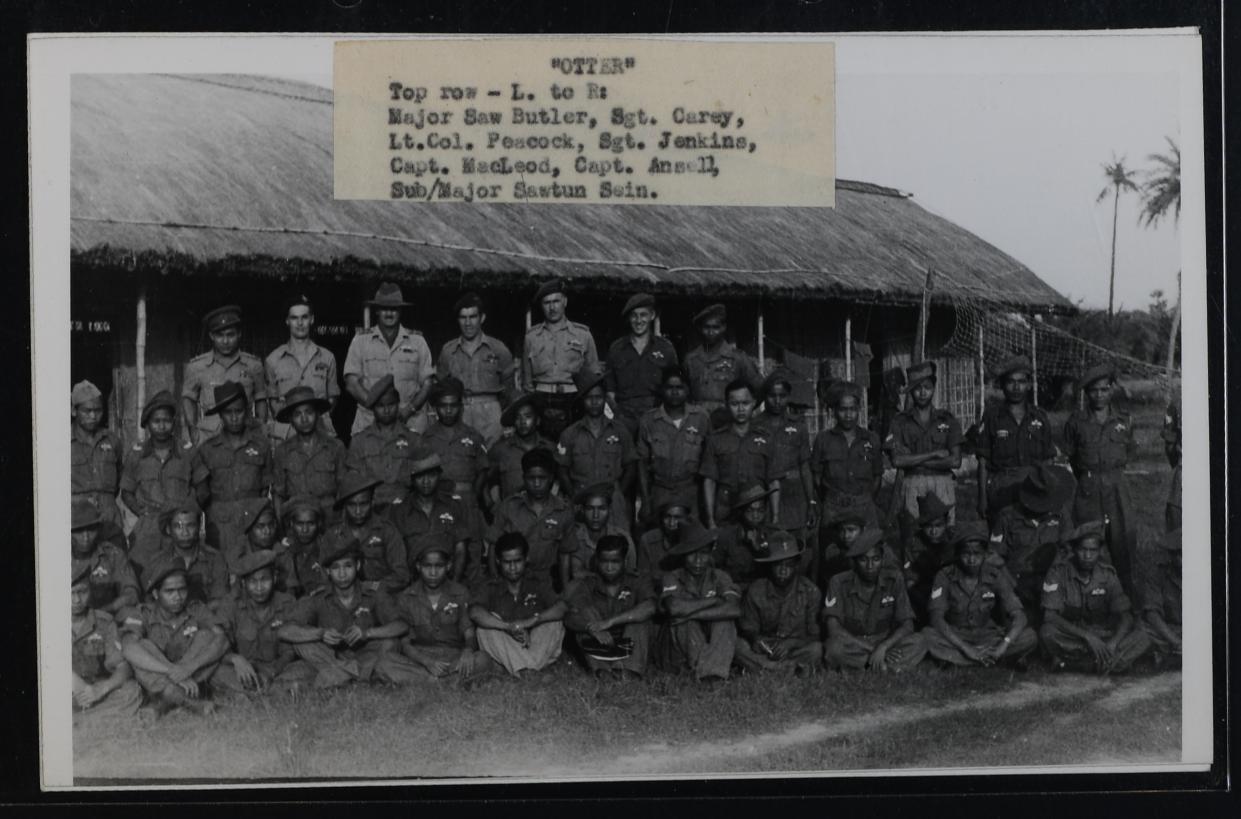
Captain Dumont was assigned to the Otter area under Lt.Col. Edgar Peacock, specifically the Otter/White sub-sector. He was also listed on team Ferret. The Otter area operated around the Mawchi road from Toungoo to Bawlake — a critical Japanese supply route.
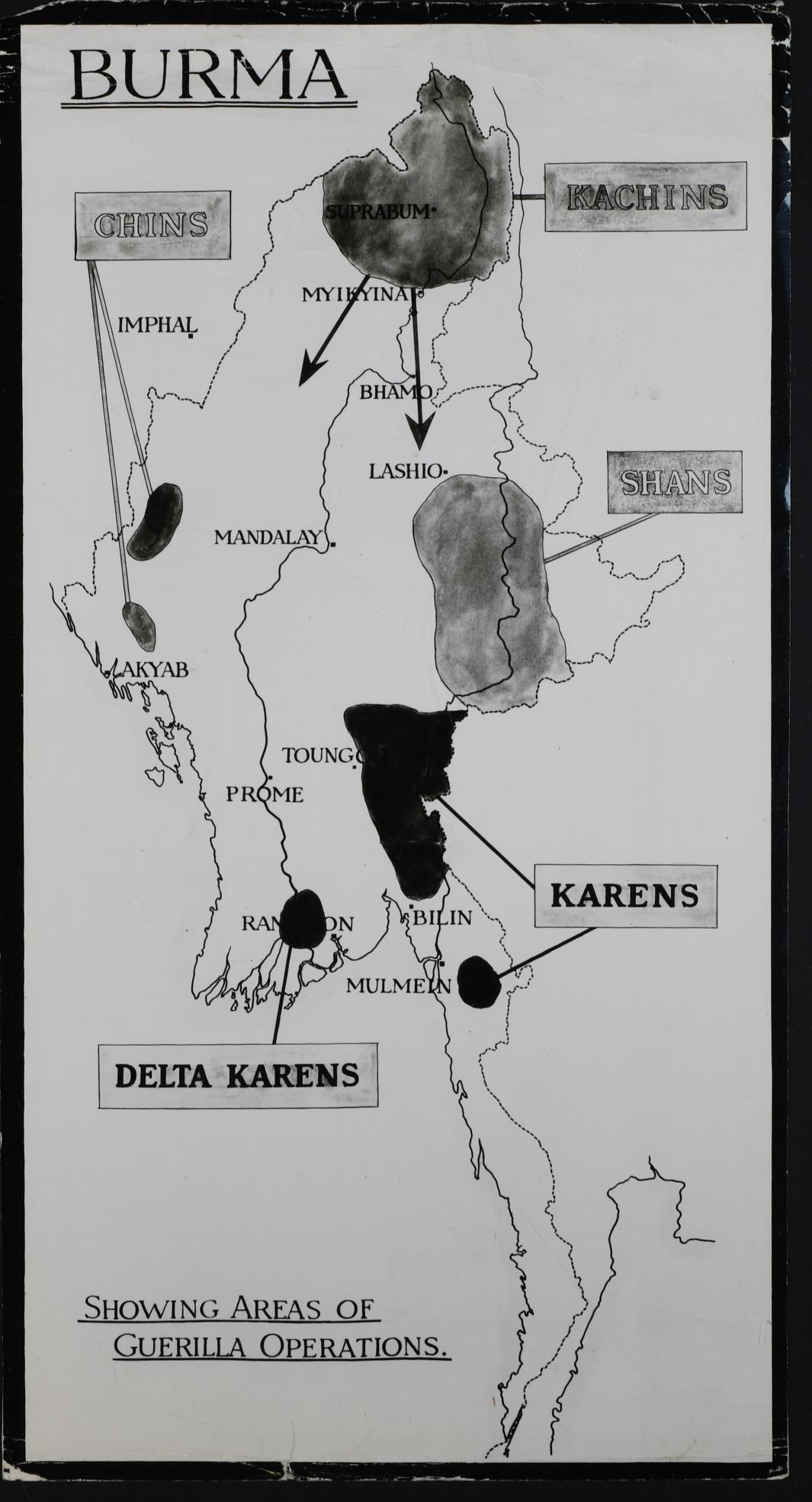
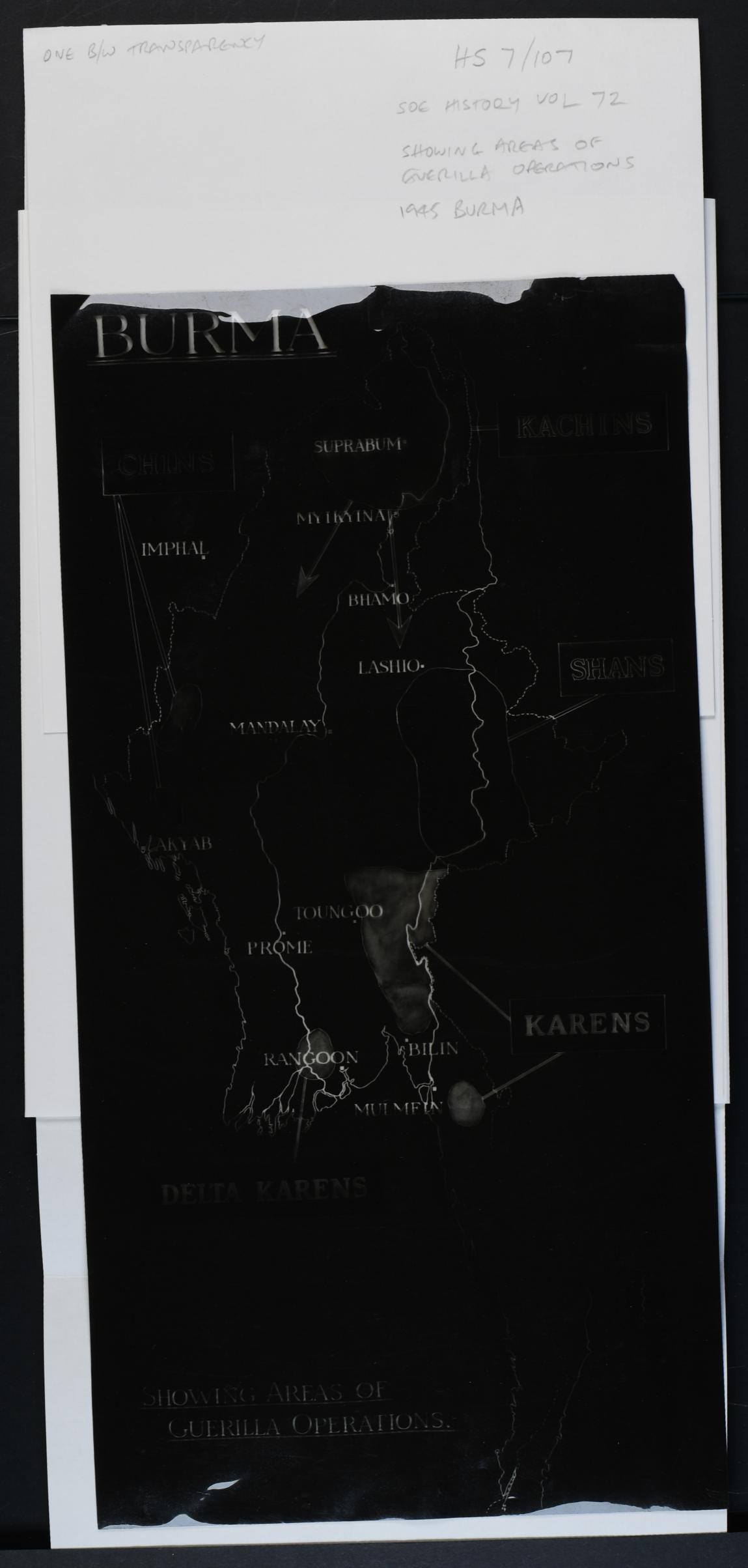
The operation was divided into four regional groups, from north to south: Walrus (commanded by Tulloch), Otter (Peacock), Hyena (Turrall, then Howell), and Mongoose (Critchley). Together they harried and disrupted the Japanese retreat through eastern Burma.
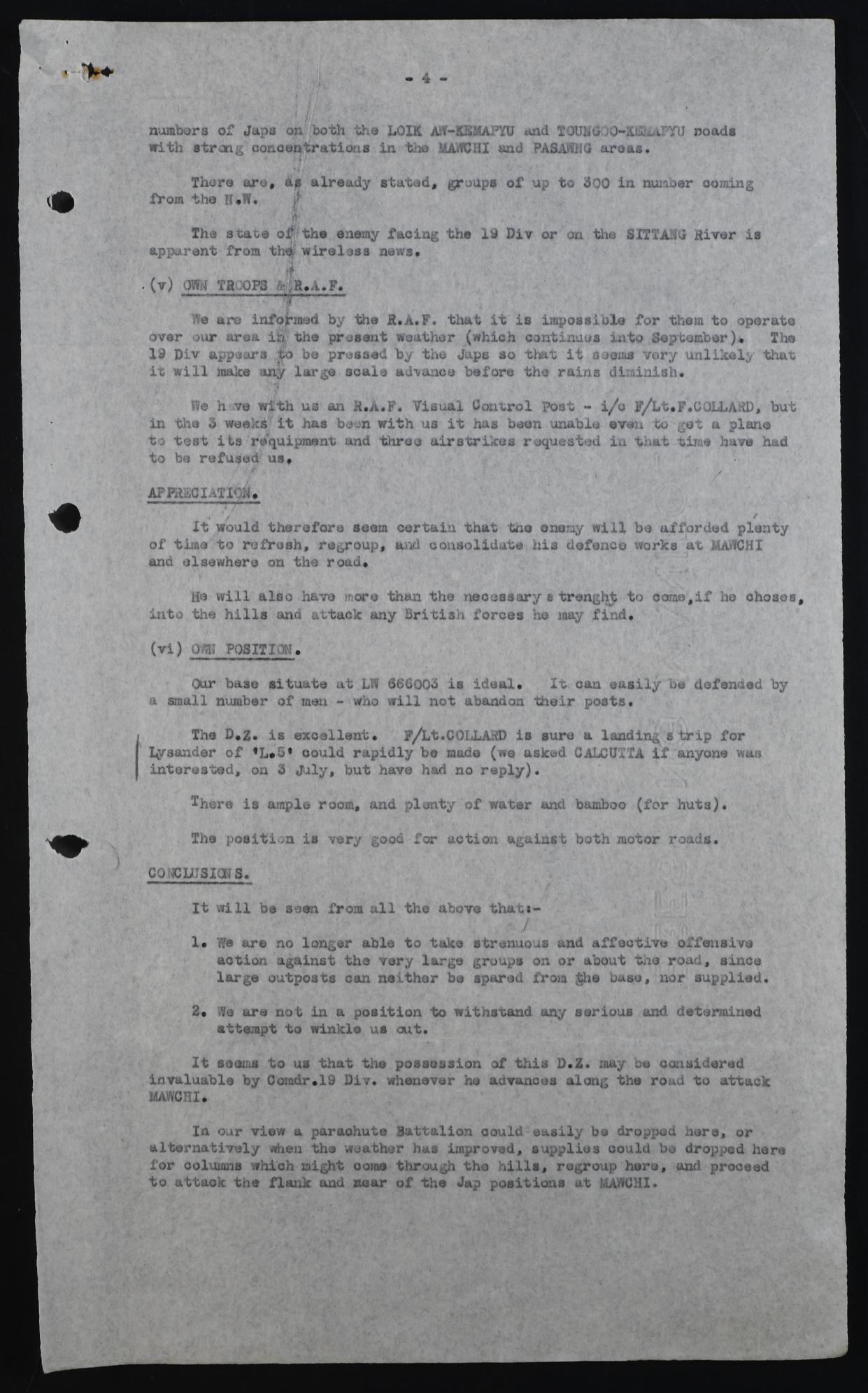
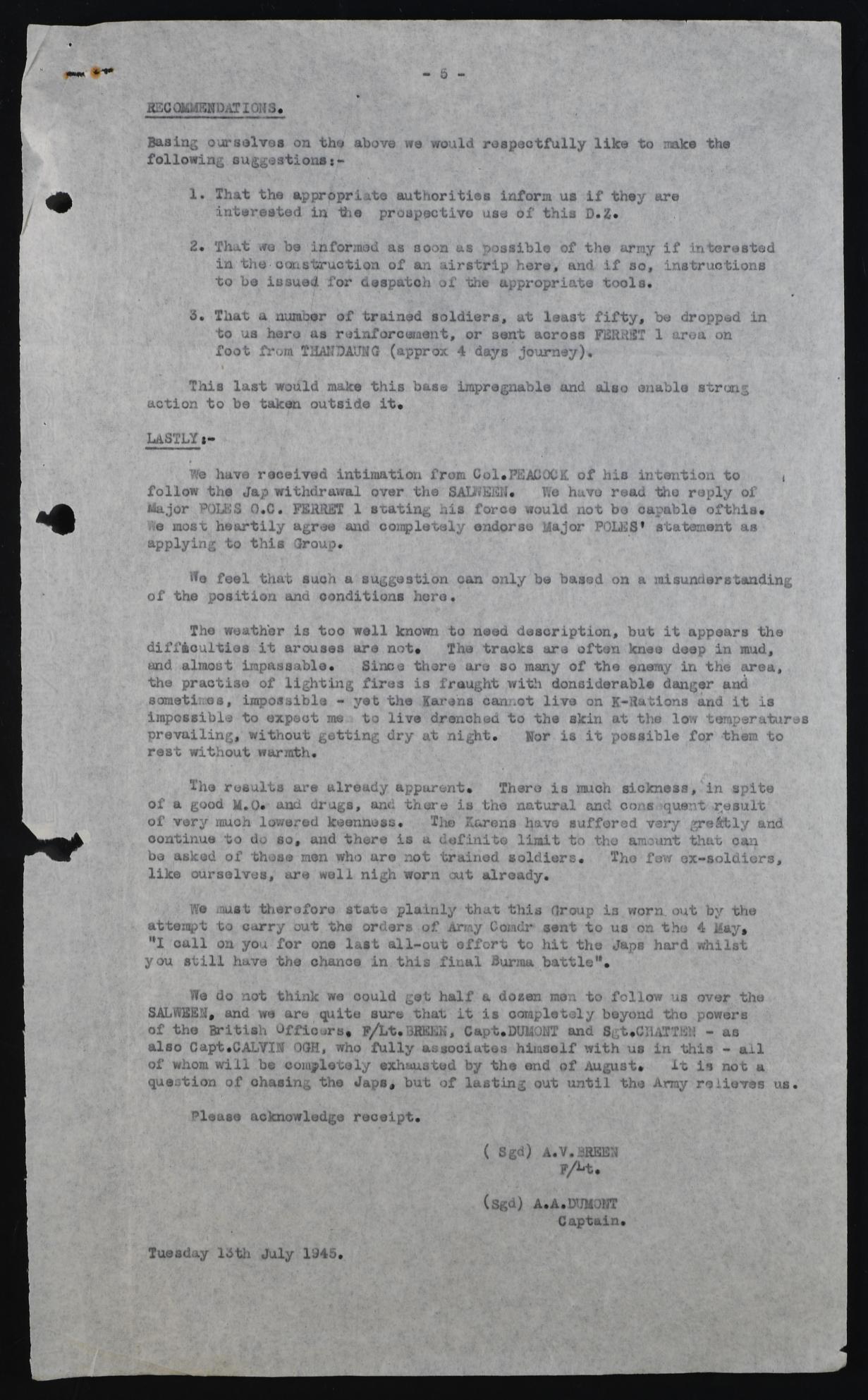
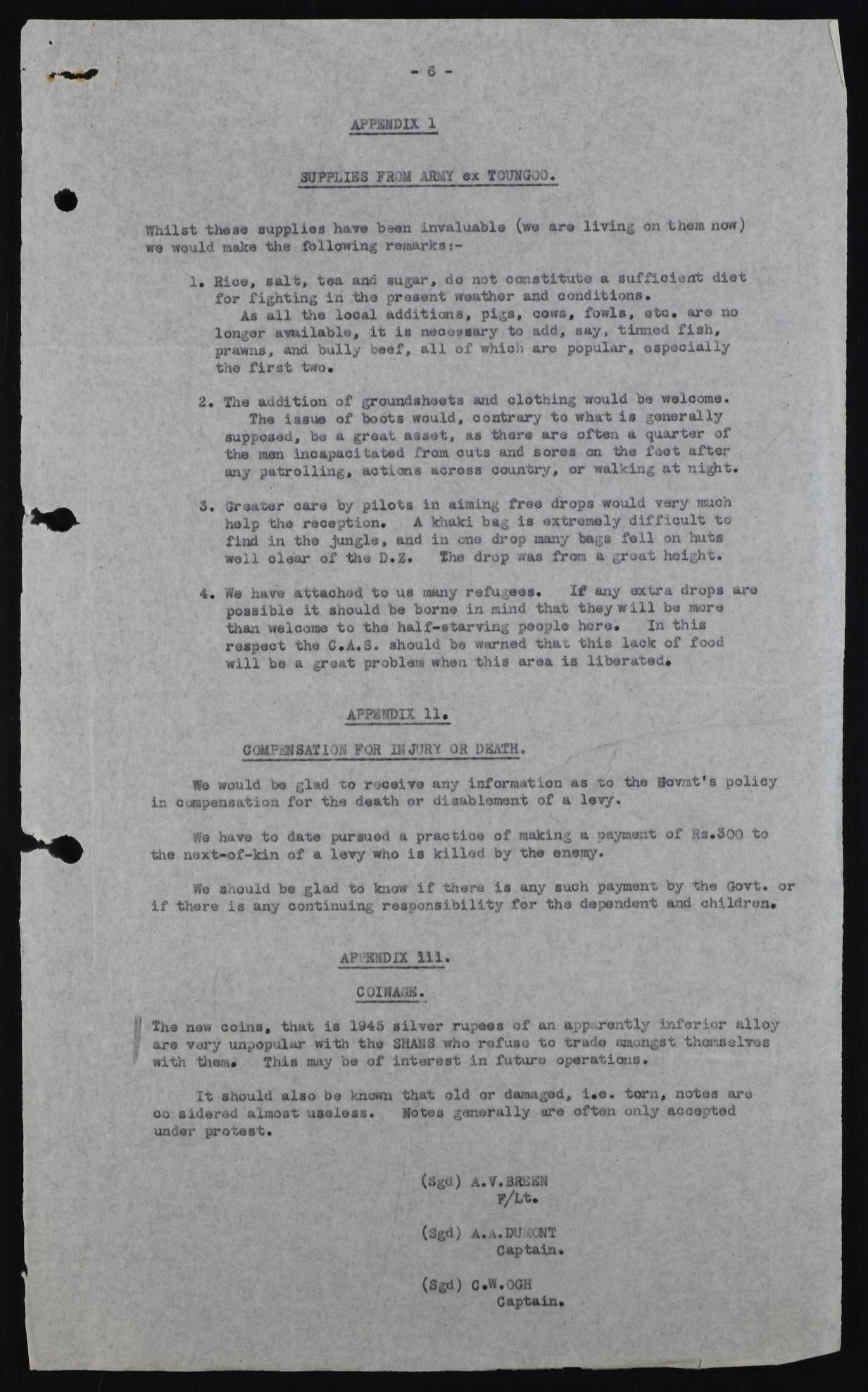
We know from Dumont’s own writing that he held a position of real authority. His assessment of Lieutenant Calvin Ogh survives in the historical record: he wrote that Ogh “undertook the whole of the administrative and ‘Q’ side of our operation, and was invaluable in dealing with the rather difficult Karens in our area.” The fact that Dumont was writing evaluations of fellow officers tells us he was in command of his sector.
“Character turned out to be the most successful SOE operation of the entire war. Character had accounted for nearly 11–12,000 Japanese killed and wounded, many of which succumbed to disease. Only eighteen unwounded prisoners were taken.” — SOE Official History
Commanded by Lt.Col. Edgar Peacock. Operated around the Mawchi road from Toungoo to Bawlake. Peacock’s Otter team alone credited with 2,743 Japanese killed and 94 vehicles destroyed.
Commanded by Tulloch. Northern sector, north of the Mawchi road. Deployed March 19 with 19 men; grew to approximately 2,000 guerrillas by April 13.
Commanded by Turrall, later Lt.Col. H.W. Howell. Operated around Pyagawpu with a base on Mount Plakho and a runway at Lipyeki village.
Commanded by R.A. Critchley. Covered the Papun-Shwegyin-Bilin area. Positions along the Shwegyin Chaung accounted for approximately 1,250 Japanese casualties in one week during the July breakout.
Getting men like Dumont into the Karen Hills was an extraordinary feat of logistics and courage. Every insertion was a leap into the unknown — a one-way parachute drop into enemy-held jungle, often at night, with no guarantee that the reception party below was friendly.
SOE insertions into Burma were flown by No. 357 and No. 358 Squadrons RAF, operating Consolidated B-24 Liberators and Douglas C-47 Dakotas from airfields at Jessore and Comilla in eastern India (present-day Bangladesh). The Liberator — a heavy bomber — was preferred for long-range drops into the deepest jungle. Agents entered through the bomb bay or a hole cut in the fuselage floor, known as the “Joe hole.”
Drops could only take place during the moon period — approximately ten nights per month when moonlight was sufficient for the aircrew to identify drop zones in the jungle canopy. This severely constrained the operational tempo. A missed moon period meant a month’s delay, during which agents waited at holding camps near the airfields in a state of high tension.
On the ground, Karen scouts prepared drop zones (DZs) — typically clearings in the hills or dried-out paddy fields. They marked them with bonfires or signal lamps arranged in a pre-agreed pattern. When the aircraft was heard overhead, the fires were lit and the drop zone confirmed by Morse lamp or S-Phone voice communication. The agents jumped, and Karen porters gathered the supply containers from the surrounding jungle.
Each agent jumped with a personal weapon, compass, emergency rations, gold sovereigns (for buying local cooperation), and a Paraset radio or B2 radio set for communication with Force 136 HQ in Calcutta. Weapons and supplies followed in cylindrical containers dropped by parachute. Agents typically wore jungle-green battledress with no insignia or identification.
Once on the ground, agents faced some of the most demanding terrain on earth. The Karen Hills rise to 5,000 feet, covered in dense primary jungle interspersed with bamboo thickets and teak forest. Tracks were often no more than animal paths. Movement was measured in hours per mile, not miles per hour. The monsoon season (May to October) turned rivers into torrents and tracks into quagmires. Malaria was endemic — virtually every British officer contracted it. Leeches, dysentery, and tropical ulcers were constant companions. Agents relied entirely on Karen villagers for food, intelligence, and survival.
The Karen (Kayin) are an ethnic group of eastern Burma with a long history of alliance with the British. During Operation Character, they proved fierce and loyal guerrilla fighters. Yet the war left a painful legacy — many Karens believed they had been promised autonomy by British officers in exchange for their wartime sacrifice. Whether such promises were formally made is historically disputed, but the perception of broken promises fuelled decades of Karen insurgency against the Burmese government. The Karen National Union has been fighting since 1949 — one of the world’s longest-running armed conflicts.
This map shows the four operational areas into which Operation Character was divided, the principal towns and rivers, and the approximate insertion routes from India. Captain Dumont served in the Otter/White sector, along the Mawchi road between Toungoo and Bawlake. Click any area label for details.
When the fighting ended, Dumont’s legal training found its most solemn purpose. Between July and December 1946, he served as judge and solicitor on four major war crimes trials in Singapore, sitting in judgement on 42 defendants — from civilian police inspectors to lieutenant generals — whose crimes ranged from individual acts of torture to the systematic deaths of thousands of prisoners of war on the Burma–Siam Railway.
Dumont was one of the youngest officers on the bench, beginning the trials as a Captain and receiving his promotion to Major during the proceedings. He served under Court President Lieutenant-Colonel P.A. Forsythe across all four trials, alongside Major J.C. McMath. The consistency of this team over six months of complex litigation suggests Dumont was a trusted and valued member of the judicial panel.
Sase Yoriyuki was a civilian police inspector in Sibu, British Borneo (present-day Malaysia). He was charged with two acts of ill-treatment resulting in death, committed between December 1943 and May 1945.
In December 1943, Sase arrested one Ngu San Tieh on suspicion of possessing a Japanese flag. He subjected the man to repeated ju-jitsu throws and water torture at the police station. Ngu San Tieh died approximately two hours into the interrogation. Sase then compelled a local doctor to certify the death as being from natural causes.
In May 1945, Sase was interrogating Chinese suspects at the police headquarters when he discovered Anis bin Elok. He tied the man to the ceiling with weights attached to his feet and beat him severely. Anis died within an hour. Sase then dismembered the body and attempted to dispose of the remains in a river.
The prosecution, led by Wing Commander T.E. Atkinson, argued that these acts were contrary to the customs and usages of war and civilian behaviour. The defence was conducted by Kanazoa Toshioki, a District Judge from Kyushu, Japan.
The longest of the four trials, spanning six weeks. Twenty-four defendants — six Japanese officers and NCOs plus eighteen Korean guards — were charged with ill-treatment of prisoners of war held in camps at Palembang, Pankalan Barai, and Pakan Baroe in Sumatra, Netherlands Dutch Indies (present-day Indonesia), between July 1944 and June 1945.
The prosecution, led by Major F.E. Mostyn (LL.B. Cantab), detailed a litany of systematic abuses: grossly inadequate accommodation and food, restricted rations, severe shortage of medical supplies, arbitrary beatings, wilful neglect of the sick, and forcing ill men to work. American Red Cross relief supplies were not distributed to prisoners but instead taken by the Japanese soldiers and guards. Translation difficulties significantly hindered the proceedings, with Malay and Tamil interpreters required throughout.
JAPANESE OFFICERS & NCOs
KOREAN GUARDS
Twelve defendants from the 19th Ambulance Corps (Kudo Butai) were charged with ill-treatment of prisoners of war on the Burma–Siam Railway and at Kanburi Camp in present-day Thailand, between August 1943 and March 1945. By this trial, Dumont had been promoted from Captain to Major, reflecting his growing judicial authority.
Major Kudo Hikosaku commanded the unit responsible for the medical care of POWs — an especially damning position given the scale of neglect. The prosecution, led by Lieutenant-Colonel E.L. St.J. Couch, demonstrated that prisoners had been subjected to physical beatings, poor living conditions, and deliberate withholding of medical supplies. The defence was conducted by Commander Tatsuzaki Ei, a Judge Advocate from the Japanese Navy.
During the proceedings, the court took the unusual step of requesting a guard physically walk the distance from the latrines to the wards — a mere 23 paces — demonstrating the proximity of the squalid facilities to the sick and dying.
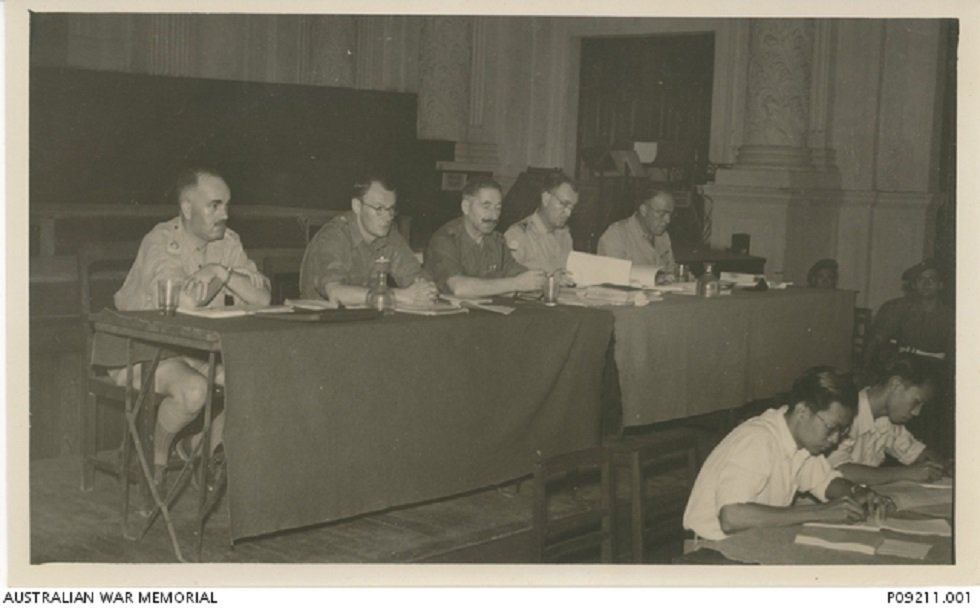
The culmination of Dumont’s judicial service — and the most significant of the four trials. The court was expanded from three to five judges to reflect the gravity of the case: an international panel comprising Lieutenant-Colonel Forsythe (President), Lieutenant-Colonel Honod de Froideville (Dutch military), Major N.F. Quinton (Australian military), Major McMath, and Major Dumont.
Five senior Japanese officers were charged with responsibility for the systematic deaths of thousands of British, Dutch, and Australian prisoners of war forced to build the Burma–Siam Railway — the notorious “Death Railway” — between October 1942 and August 1944. Crimes occurred across the camps at Nong Pladuk, Chungkai, Tamakan, and Tarso in Siam (present-day Thailand).
Overall commander of the Southern General Army Railway Unit — the organisation that built the Death Railway. Charged with command responsibility for insufficient accommodation, food, clothing, and medication; poor hygiene; overwork; and frequent beatings resulting in many deaths.
Commander of Siam Prisoner-of-War Administration. Directly responsible for all POW camps along the railway. The court made a mercy recommendation — noting Nakamura had himself court-martialled a Japanese officer who shot a prisoner — but the recommendation was rejected and the death sentence upheld.
Camp commander. Individually charged with ordering the death of a British POW who had been shot after an altercation with a guard, and with exposing POWs to aerial attack whilst they were working.
Camp commander. Individually charged with ordering the execution of four British prisoners of war who had attempted to escape — a direct violation of the Geneva Convention.
The prosecution was led by Lieutenant-Colonel Couch, Major A.A. Hibbert, and Major Grant McIntyre (Australian). The defence was conducted by Shimokawa Hisaichi, a Judge of the Supreme Court of Japan, and Amano Kenji, a Judge of the Osaka District Court. Defence Advisory Officer was Major N.S. Bains, LL.B., an Advocate of the Lahore High Court.
Witness testimony during the trial included references to Lieutenant-Colonel Philip Toosey, the real-life British officer who is widely regarded as the inspiration for the character of Colonel Nicholson in the 1957 film The Bridge on the River Kwai. Toosey appeared to request additional anti-aircraft protection for his men.
Complete transcripts and supporting documents for all four trials are held in this archive. The records include witness depositions, judicial reviews, petitions, and confirmation of sentence documents. External links above open the International Crimes in the Western Pacific (ICWC) database hosted by legal-tools.org.
The photograph from the Australian War Memorial (catalogue P09211.001) shows the court during the Ishida trial — the Death Railway case. The five judges are seated at the bench, probably from left to right: Major J.C. McMath, Major A.A. Dumont, Lieutenant-Colonel P.A. Forsythe (Court President), Lieutenant-Colonel C. Honod de Froideville (Dutch military), and Major N.F. Quinton (Australian military).
The international composition of the bench for Case 084 was deliberate. Dutch and Australian officers joined the panel because their countrymen formed a significant portion of the victims. The scale of the charges — covering the entire railway construction programme — demanded a court of unusual gravity.
That Dumont, at just 25 years old, sat on this bench alongside a Judge of the Supreme Court of Japan (for the defence) and officers of considerably greater seniority speaks volumes about his legal acumen and the respect he had earned during the earlier trials.
This archive contains 584 documents and photographs from the National Archives of the United Kingdom. Click any image to view it at full resolution.
The SOE was created on 22 July 1940 at Winston Churchill’s direction to conduct sabotage, subversion, and guerrilla warfare behind enemy lines. Churchill’s famous instruction to Minister of Economic Warfare Hugh Dalton: “And now set Europe ablaze.”
Headquartered at 64 Baker Street, London (earning the nickname “the Baker Street Irregulars”), SOE at peak strength employed over 13,000 people, of whom about 3,200 were women. It operated across occupied Europe, the Middle East, and Southeast Asia.
Force 136 was SOE’s arm in Southeast Asia. Under Commander Colin Mackenzie, it ran operations across Burma, Malaya, Sumatra, Siam, and French Indochina. Burma was its largest and most active theatre, where Force 136 recruited over 20,000 personnel from at least 14 different ethnic communities.
SOE was dissolved on 15 January 1946 with just 48 hours’ notice. Most records were classified for decades; many files were destroyed. The full story is still being reconstructed from surviving documents in the National Archives HS series.
Colin Gubbins — Executive head from September 1943. The most important single figure in SOE’s history.
Colin Mackenzie — Commander of Force 136, 1941–45.
Lt.Col. Edgar Peacock — Led Operation Character’s Otter area. Dumont’s commanding officer in Burma.
Hugh Seagrim, GC — “Grandfather Longlegs.” Surrendered himself to the Japanese to stop Karen reprisals. Posthumous George Cross.
soeinburma.com — Richard Duckett’s definitive online resource
singaporewarcrimestrials.com — Singapore War Crimes Trials archive
M.R.D. Foot, SOE: An Outline History
Charles Cruickshank, SOE in the Far East
Ian Morrison, Grandfather Longlegs
Leo Marks, Between Silk and Cyanide